


Category filter
How to push iOS app configuration using XML?
Hexnode UEM can deploy iOS app configuration as an XML property list when an iOS app is installed from the Hexnode app inventory. IT administrators use this workflow to preconfigure supported in-app settings, such as account or login-related values, so users do not need to complete the first-time app setup manually. The configuration is delivered with the app during installation and applies only to apps installed through the Hexnode UEM policy.
This iOS app configuration workflow is supported for all app types added to the Hexnode UEM console, including VPP apps, App Store apps, apps added using a manifest URL, and apps uploaded as IPA files. The configurable keys and values depend on the app developer or vendor. App configurations cannot be applied to apps that are already installed on the device, and the XML file cannot be deployed separately from the app installation.
TL;DR for iOS App Configuration XML in Hexnode UEM
- Use Policies > New Policy > iOS > App Management > App Configurations to upload the app configuration XML file.
- The target app must already be available in the Hexnode UEM app inventory.
- The XML configuration is deployed with the app during installation.
- Hexnode UEM does not deploy the XML file separately or apply it to an app that is already installed on the device.
- Supported configuration keys depend on the app developer or vendor.
How iOS App Configuration XML Works in Hexnode UEM
In Hexnode UEM, an iOS app configuration XML file is attached to a managed app configuration policy. When the policy is associated with target devices or device groups, Hexnode UEM installs the selected app and sends the XML configuration with the app installation request.
The XML file must use the format expected by the target app. Hexnode UEM can substitute supported wildcards in the XML file with device or user information stored in the portal, such as username, email address, UDID, serial number, device name, or asset tag.
Deploy iOS App Configurations Using XML in Hexnode UEM
Follow these steps to push an iOS app configuration XML file to devices from the Hexnode UEM portal.
- Log in to your Hexnode UEM portal.
- Navigate to Policies > New Policy.
- Provide a policy name. The name field is mandatory. You can also add a description for the policy.
- Go to iOS > App Management > App Configurations.
- Click +Add new configuration.
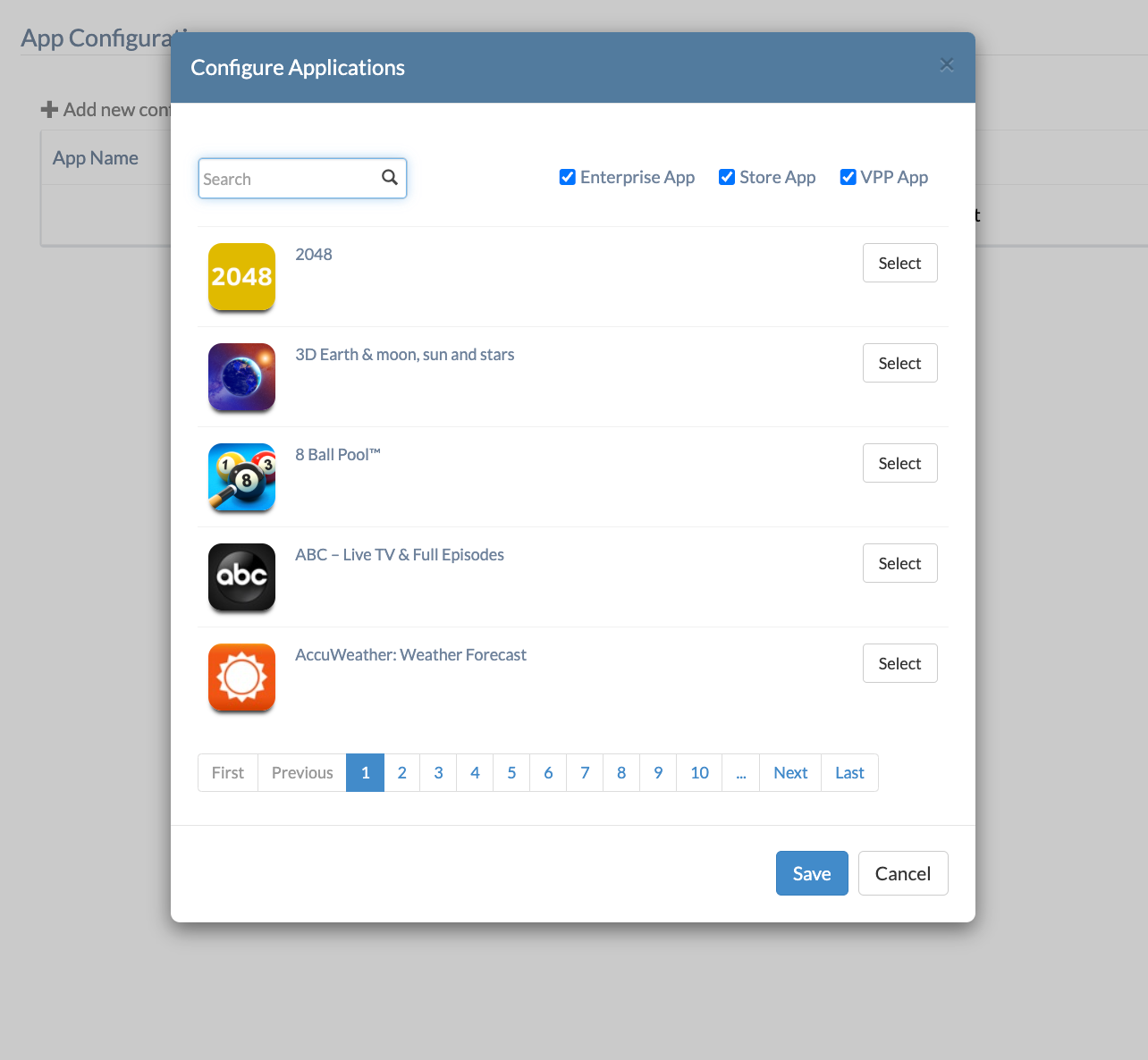
- Select the app for which you want to define the configuration. Ensure that the app is already present in the Hexnode UEM app inventory.
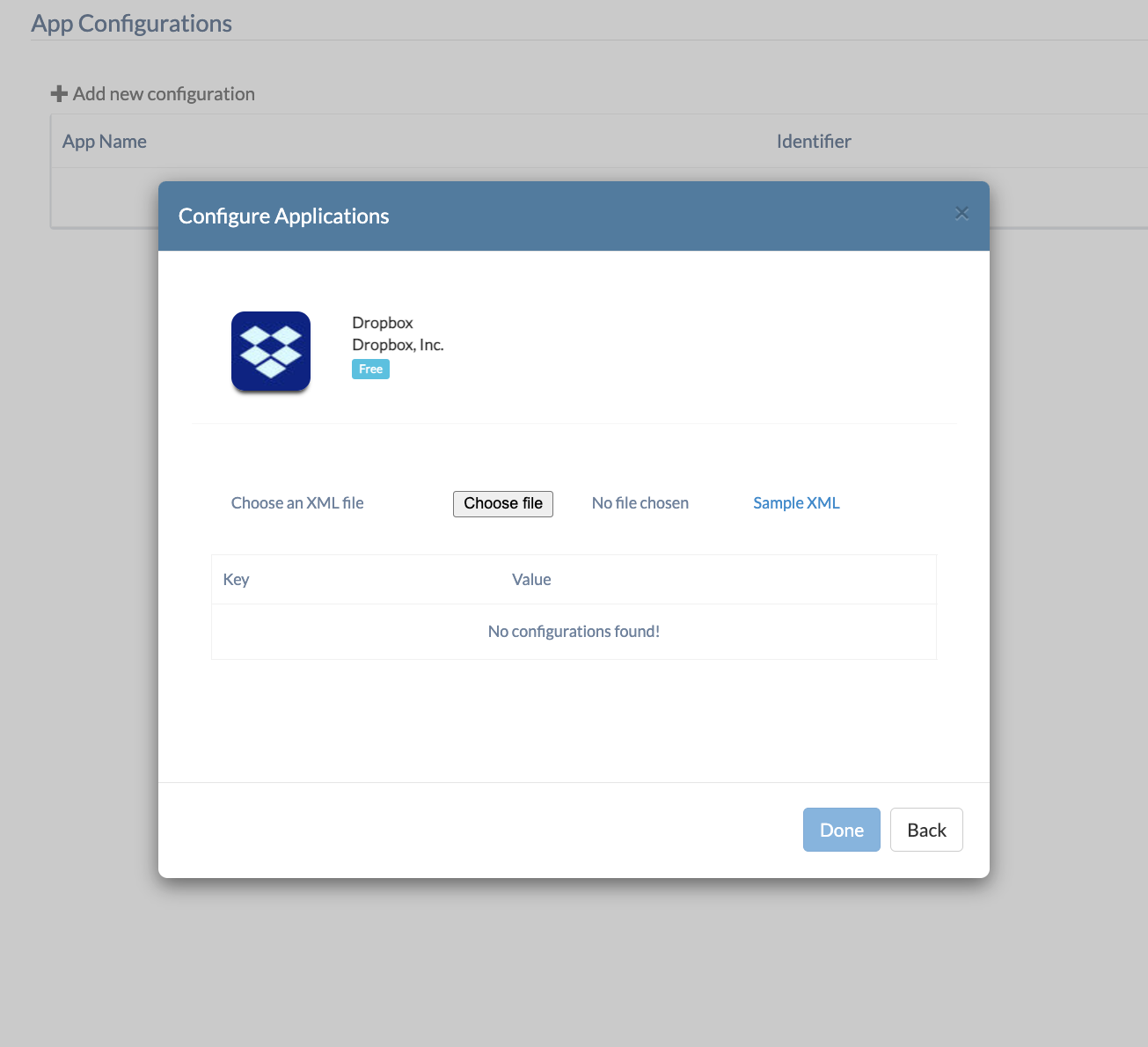
Select an app from the Hexnode UEM app inventory before uploading the iOS app configuration XML file. - Upload the app configuration XML file by selecting Choose file. You can download the sample XML file from the portal to view the correct format for preparing the app configuration file.
Upload the XML file that contains the app configuration values for the selected iOS app. - Click Done.
- Save the app configuration by clicking Save.
- To associate the policy with target devices, go to Policy Targets.
- Select the devices or device groups that you want to associate the policy with, and click OK to confirm.
- Click Save to apply the policy.
After the policy is deployed to the target devices, Hexnode UEM installs the app and applies the configuration defined in the XML file.
Supported Wildcards for iOS App Configuration XML in Hexnode UEM
Sample iOS App Configuration XML for Google Chrome
The following sample XML file shows the format for the Google Chrome app when it has been added to the Hexnode UEM portal as a VPP app.
|
1 2 3 4 5 6 7 8 9 10 11 12 13 14 15 16 17 18 19 20 21 22 23 24 25 |
<?xml version="1.0" encoding="UTF-8"?> <!DOCTYPE plist PUBLIC "-//Apple//DTD PLIST 1.0//EN" "http://www.apple.com/DTDs/PropertyList-1.0.dtd"> <plist version="1.0"> <dict> <key>AdsSettingForIntrusiveAdsSites</key> <integer>1</integer> <key>AllowedDomainsForApps</key> <string></string> <key>AuthNegotiateDelegateWhitelist</key> <string></string> <key>AutoFillEnabled</key> <true/> <key>AutofillAddressEnabled</key> <false/> <key>BuiltInDnsClientEnabled</key> <true/> <key>CertificateTransparencyEnforcementDisabledForUrls</key> <array> <string></string> <string></string> </array> <key>DefaultDownloadDirectory</key> <string></string> </dict> </plist> |
Troubleshooting iOS App Configuration XML in Hexnode UEM
The app does not appear while adding the configuration
If the app is unavailable when selecting an app for configuration, verify that the app has already been added to the Hexnode UEM app inventory. The policy can attach an XML configuration only to an app that exists in the inventory.
The configuration does not apply to an app that is already installed
Hexnode UEM applies the iOS app configuration XML only during app installation. If the app is already installed on the device, the XML configuration cannot be applied separately through this workflow.
The XML keys do not change app behavior after installation
The configurable keys depend on the app developer or vendor. Confirm that the XML file uses the keys and value types supported by the target app, and use the sample XML option in the Hexnode UEM portal as a format reference.
Frequently Asked Questions
Does Hexnode UEM support iOS app configuration XML for all app types?
Yes. Hexnode UEM supports iOS app configuration XML for VPP apps, App Store apps, apps added using a manifest URL, and apps uploaded as IPA files, as long as the app is present in the Hexnode UEM app inventory.
Can Hexnode UEM apply an XML configuration to an app that is already installed?
No. The app configuration XML is deployed along with the app during installation. Hexnode UEM cannot apply this XML configuration to an app that is already installed on the device.
Can the iOS app configuration XML file be deployed separately?
No. Hexnode UEM deploys the XML file only with the app installation. The XML file cannot be deployed as a separate payload through this workflow.
Which iOS app settings can be configured using XML?
The supported settings depend on the configuration keys and values built into the app by the app developer or vendor. Enterprise apps may support different configuration variables depending on how the vendor implemented managed app configuration.
Can Hexnode UEM insert device-specific values in iOS app configuration XML?
Yes. Hexnode UEM supports wildcards such as %username%, %email%, %udid%, %serialnumber%, and %devicename% to substitute values with device or user information stored in the portal.


