5 must-have software services for ensuring enterprise security
Enterprise security essentials and tools for comprehensive protection

Get fresh insights, pro tips, and thought starters–only the best of posts for you.

Enterprise cybersecurity challenges often start with something that looks routine: a trusted vendor account signs in, and within minutes, an attacker is moving laterally across SaaS, cloud workloads, and on‑prem systems. No dramatic break-in, just stolen credentials and quiet access that can escalate into data exposure, outages, or even ransomware.
What makes enterprise cybersecurity uniquely difficult is scale and complexity. Most organizations run hybrid cloud environments alongside legacy systems, creating a constantly expanding attack surface and inconsistent security controls. Add a large workforce, plus contractors and partners, and identity and access management (IAM) becomes harder to enforce consistently. On top of that, the stakes are higher: regulatory expectations and reputational impact mean even a single incident can have lasting consequences.
In this blog, we’ll break down the top 10 cybersecurity challenges enterprises face, and the practical steps to reduce risk, strengthen resilience, and improve incident response.
Enterprises today operate in complex, interconnected environments, making cybersecurity challenges more difficult to manage than ever. From evolving enterprise cybersecurity risks to growing compliance pressures, organizations must address multiple threat vectors at once.
One of the most common cybersecurity challenges in enterprises is sheer sprawl: endpoints, SaaS apps, cloud workloads, APIs, and remote access paths. Every new app, integration, and exposed service increases the attack surface.
Different teams own different parts of the environment. Security standards vary across business units, cloud accounts, and regions, so controls become inconsistent, and visibility gets patchy.
Modern ransomware is often “steal + encrypt + extort.” Attackers take data first, then lock systems, then apply pressure through leak threats or disruption. It’s both an IT incident and a business crisis.
Enterprises have a larger blast radius, shared services, interconnected apps, and complex recovery dependencies. Even after restoration, stolen data can trigger regulatory and reputational fallout.
In enterprise environments, identity is the perimeter. IAM includes users, contractors, vendors, service accounts, Single Sign-On (SSO), Multi Factor Authentication, and privileged access. When attackers get credentials, they don’t hack; they log in.
Mergers, legacy directories, and role sprawl create messy access patterns. Contractors and third parties add churn. Exceptions pile up. Over time, permissions drift far from what people truly need.
Go identity-first with strong controls: Enforce MFA widely (prioritize phishing-resistant methods for admins) and standardize SSO where possible.
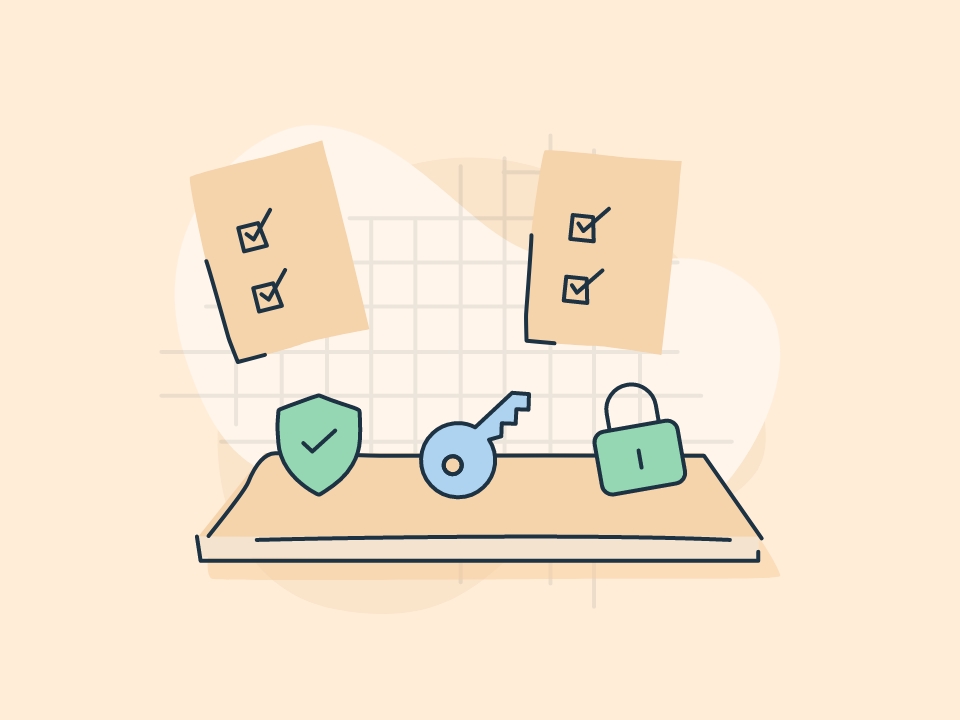
Comprehensive cybersecurity kit with frameworks, policies, checklists, and UEM guidance for enterprises.
DOWNLOADAmong the most persistent cybersecurity challenges, phishing and BEC attacks exploit people, not systems. Attackers use deceptive emails, fake invoices, or impersonation tactics to steal credentials or redirect funds.
Large finance teams, multiple approval layers, and frequent vendor payments create opportunity. A single compromised account can lead to payroll diversion, vendor fraud, or credential theft that enables lateral movement.
In cloud security, responsibility is shared between the provider and the customer. Misunderstanding that boundary is one of the major enterprise cybersecurity risks today.
Multiple teams provision resources rapidly across multi-cloud environments. Without standardized controls, inconsistent policies and configuration drift become common.
Enterprises rely on vendors, SaaS providers, and open-source components, each adding potential supply chain risk. Limited visibility and third-party access make this a growing cybersecurity challenge that expands overall enterprise cybersecurity risk.
Large vendor ecosystems make it difficult to assess and continuously monitor third-party security controls. Visibility is often limited to questionnaires and trust-based assurances.
Enterprises must continuously identify and remediate vulnerabilities across thousands of endpoints, servers, applications, and cloud workloads, making this one of the most resource-intensive cybersecurity challenges. As environments grow, so does the volume of security findings, many of which require coordination across IT, security, and business teams.
Legacy systems that cannot be easily updated, strict uptime requirements, and limited maintenance windows often delay remediation. At the same time, security teams are flooded with scan results. Not every vulnerability carries the same real-world risk, but without proper prioritization, critical exposures can remain unpatched while low-risk issues consume attention, increasing overall enterprise cybersecurity risk.
Not all cybersecurity challenges originate outside the organization. Insider threats involve employees, contractors, or partners who misuse access, intentionally or accidentally. In many cases, attackers compromise legitimate accounts and operate under trusted identities, making detection significantly harder.
Enterprises typically manage thousands of users with varying levels of access to sensitive systems and data. Collaboration platforms, shared drives, and cloud storage increase the risk of accidental data exposure. At the same time, privileged users often have broad access, which can amplify impact if credentials are stolen or abused. Weak offboarding processes and excessive permissions further increase enterprise cybersecurity risk.
As security stacks grow, so do alerts. Enterprises deploy multiple tools across endpoints, network, cloud security, and identity, but more tools don’t automatically mean better detection. Managing signal vs. noise becomes one of the most overlooked cybersecurity challenges.
Security teams are often overwhelmed by high alert volumes, false positives, and disconnected tools. When monitoring isn’t well-tuned, real threats hide in plain sight, increasing overall enterprise cybersecurity risk.
Many enterprises focus heavily on regulatory compliance, but passing audits doesn’t always eliminate real cybersecurity challenges. A checklist approach can create a false sense of security.
Regulatory requirements (GDPR, HIPAA, ISO 27001, etc.) demand documentation and evidence. Over time, security programs can shift toward audit preparation instead of measurable risk reduction.
Modern enterprises require more than just visibility; they need proactive control, automation, and rapid response across every endpoint. Here is how Hexnode helps reduce enterprise cybersecurity risks in practical, scalable ways.
Close critical security gaps by automating the deployment of OS and third-party application patches across Windows, macOS, and Linux. Hexnode allows IT to schedule “Zero-Touch” updates, ensuring vulnerabilities are remediated before they can be exploited by AI-driven threats.
Hexnode XDR delivers threat detection and response by correlating endpoint activity with real-time security signals. This enables faster identification of suspicious behavior, such as lateral movement, allowing for rapid device isolation and one-click remediation to contain ransomware or credential compromise.
Enforce a Zero Trust model by integrating with identity providers like Okta and Microsoft. Hexnode ensures that only “healthy,” compliant devices can access corporate data. If a device fails a security check (e.g., encryption is disabled), access to apps like Salesforce or Slack is automatically revoked.
Leverage Hexnode Genie to execute security commands and audit device health through natural language queries. By automating repetitive administrative tasks and complex scripting, IT teams can accelerate incident response and focus on higher-level strategic defense.
Enforce encryption, password complexity, and security configurations automatically to maintain continuous compliance. If a device “drifts” from these policies, Hexnode triggers immediate alerts or self-healing actions to align the device with regulatory requirements like GDPR or HIPAA.
Reduce the attack surface by controlling the entire software lifecycle. Admins can blacklist unauthorized software, enforce mandatory app versions, and use containerization to keep sensitive corporate data isolated from personal apps on BYOD.
Quickly contain threats on lost, stolen, or compromised devices with remote lock and wipe capabilities. These tools allow for the immediate erasure of business data without requiring physical access, ensuring that a lost endpoint does not result in a data breach.
Enterprise cybersecurity challenges are no longer isolated IT concerns; they are core business risks. A single misconfiguration, compromised credential, or third-party weakness can escalate quickly at enterprise scale. Enterprises must focus on visibility, enforce consistent controls, and prioritize real risk reduction over checkbox compliance. Strong identity and access management, proactive patching, continuous monitoring, and secure-by-default configurations form the foundation of a mature enterprise cybersecurity strategy.
By addressing these challenges systematically and aligning security with business objectives, enterprises can reduce risk, improve response readiness, and build lasting resilience in an evolving threat landscape.
Start your 14-day trial for automated endpoint defense and proactive threat response.
SIGN UP NOWThe biggest cybersecurity challenges include expanding attack surfaces, ransomware, identity and access management complexity, cloud misconfigurations, third-party risk, insider threats, vulnerability management gaps, and maintaining compliance while reducing real enterprise risk.
Strong identity and access management (IAM) prevents unauthorized access by enforcing least privilege, multi-factor authentication, and controlled privileged access, reducing credential-based attacks and limiting lateral movement within enterprise environments.
Enterprises can reduce ransomware risk by implementing immutable backups, enforcing network segmentation, deploying endpoint detection and response, strengthening MFA, and regularly testing incident response and recovery processes.
Effective cloud security ensures proper configuration, least-privilege access, centralized logging, and continuous monitoring, reducing misconfigurations and minimizing exposure across hybrid and multi-cloud enterprise environments.
Centralized endpoint management improves visibility, enforces security policies, automates patching, restricts risky applications, and enables remote remediation, helping enterprises reduce device-level vulnerabilities and maintain a stronger overall security posture.