


Seamless Migration to Hexnode
Learn how Hexnode Gateway enables structured migration workflows for macOS and Windows devices.

Get fresh insights, pro tips, and thought starters–only the best of posts for you.

For many IT teams, adopting a new device management solution doesn’t fail due to budget constraints – it stalls because of onboarding anxiety.
The concerns are familiar: long implementation cycles, complicated setup processes, and the need for extensive administrator training.
In organizations already operating with lean IT teams and growing security demands, introducing a new UEM platform can feel like adding complexity rather than reducing it.
Today, the real competitive advantage in endpoint management isn’t just depth of functionality – it’s speed to value.
Hexnode UEM is designed with this principle in mind. With flexible enrollment, structured migration support, and clear documentation, Hexnode helps IT teams deploy and transition devices with minimal complexity.
Platforms that require specialized configuration knowledge, scripting expertise, or extensive administrator training introduce friction before value is realized.
Instead of focusing on strengthening security posture or improving device visibility, teams may spend valuable time simply learning how to operate the system effectively.
Complex deployments can result in:
Even a feature-rich platform loses its appeal if implementation feels burdensome.
That’s why modern IT buyers increasingly prioritize solutions that balance robust capabilities with deployment simplicity.
Reducing onboarding friction starts with giving IT teams structured, flexible ways to bring devices under management.
Hexnode’s deployment framework is built around multiple enrollment pathways, centralized configuration, and cross-platform consistency, allowing organizations to choose the approach that aligns with their operational model.
Different organizations require different enrollment workflows. A field-based workforce, a corporate-owned device rollout, and a BYOD program each demand a different approach.
Hexnode supports multiple enrollment methods to accommodate these scenarios.
Administrators can enroll devices using:
These options allow IT teams to select an approach that fits their environment.
Modern IT environments rarely operate within a single ecosystem. Organizations across the US, UK, and Germany often manage a combination of:
Hexnode enables administrators to manage these supported platforms from a unified console.
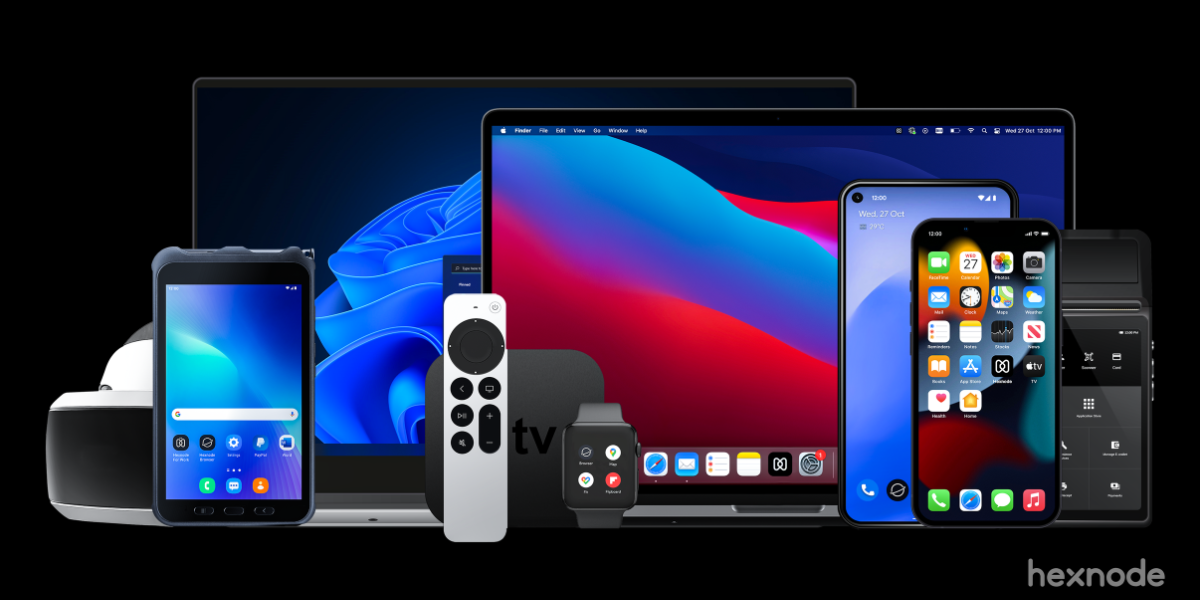
This centralized approach eliminates the need to operate separate management tools for different operating systems, simplifying policy deployment and device oversight.
Hexnode allows administrators to configure enrollment settings in advance, including:
This pre-configuration reduces the amount of user interaction required during onboarding and helps standardize device setup across departments.
For organizations operating at scale, Hexnode also supports bulk user provisioning and directory integration, including integration with services such as Active Directory and LDAP.
By syncing user identities and roles into the platform, administrators can streamline user-device mapping and reduce manual account creation efforts.
Next, we can move into the Migration & Hexnode Gateway section, where we address one of the biggest anxiety points in mature markets: switching platforms without disruption.
Migration from an existing MDM or legacy management solution is often greater concern.
Organizations worry less about new features and more about operational disruption during the transition.
For IT teams managing production environments, even temporary instability can have significant downstream effects.

Explore how structured enrollment and controlled migration strategies can reduce onboarding complexity.
Download WhitepaperSwitching endpoint management platforms introduces several perceived risks:
In regulated or productivity-sensitive environments, these concerns can delay decision-making. To address this hesitation, migration workflows must prioritize continuity, structure, and administrative control.
Hexnode Gateway is designed to support structured migration workflows, particularly for macOS and Windows devices, enabling administrators to transition devices into Hexnode UEM in a controlled manner.
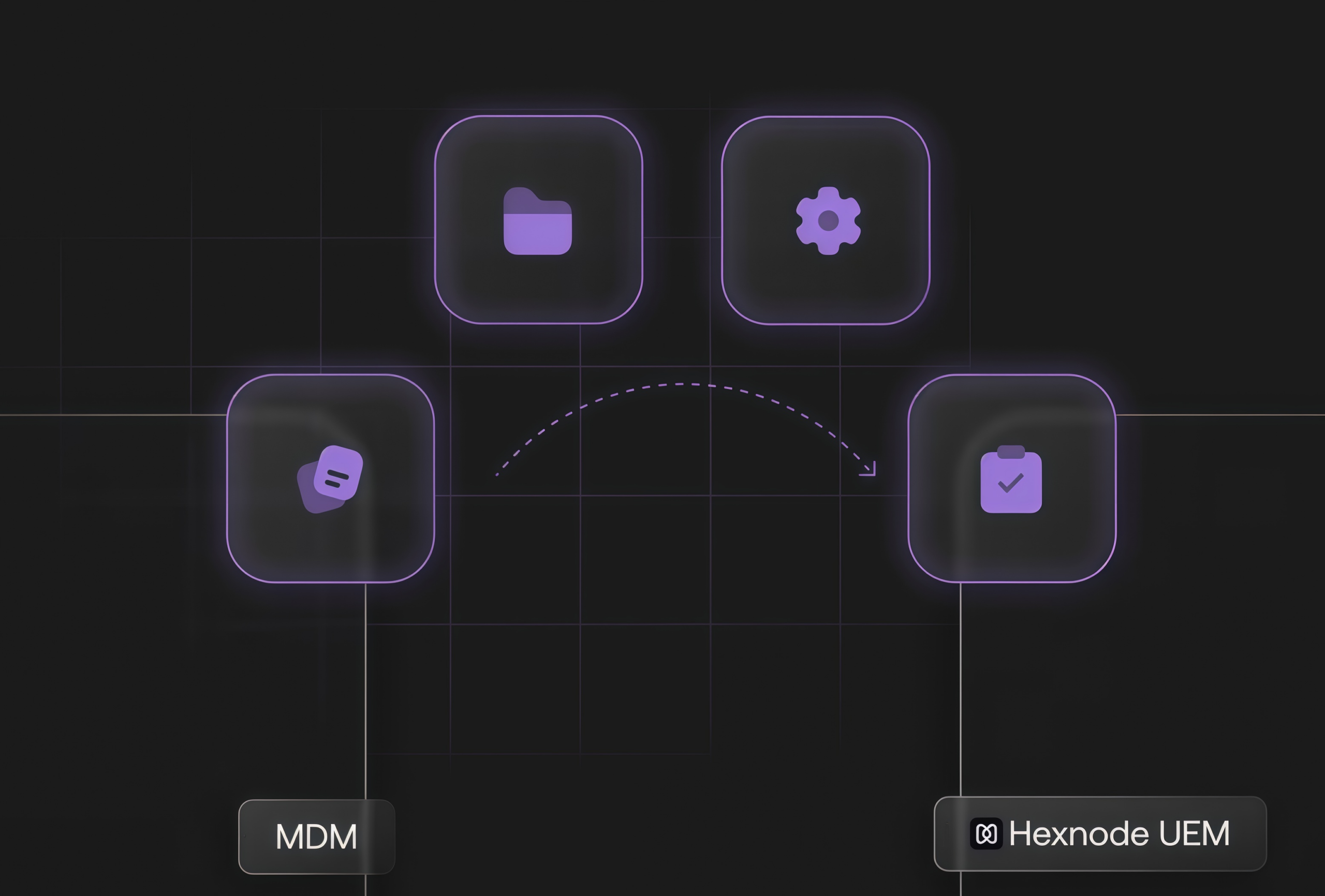
Rather than relying solely on manual unenrollment and re-enrollment processes, Gateway facilitates migration through a managed workflow that can be deployed across device fleets. This approach supports bulk migration scenarios and reduces the need for repetitive administrative actions.
One of the primary concerns during MDM migration is the potential need for device resets. Factory resets can disrupt users, require data restoration, and increase support requests.
Hexnode’s documented migration approach emphasizes transitioning devices without requiring unnecessary wipes wherever technically feasible. By avoiding full device resets in supported scenarios, organizations can preserve user environments and maintain continuity during the move to Hexnode UEM.
This approach helps reduce friction during migration and supports a smoother transition experience for both IT administrators and end users.
Beyond enrollment and migration workflows, long-term usability plays a key role in how quickly organizations realize value from a UEM platform.
Hexnode supports ongoing operational efficiency through built-in capabilities such as patch management and automation, helping IT teams reduce manual workload after deployment.
Deploying devices is only the first step; keeping them secure and up to date is an ongoing responsibility. Manually tracking OS updates and third-party patches across distributed environments can quickly consume IT resources.
Hexnode supports patch management workflows that enable administrators to monitor available updates and deploy patches to managed devices in a structured manner. By allowing IT teams to schedule and automate update rollouts, the platform helps maintain device security without requiring constant manual intervention.
As device fleets grow, repetitive administrative tasks can slow down IT operations. Automating routine workflows becomes essential to maintaining efficiency without increasing headcounts.
Hexnode supports automation capabilities that allow administrators to trigger actions based on predefined conditions. These automated workflows can streamline processes such as policy deployment, compliance enforcement, and device management tasks.
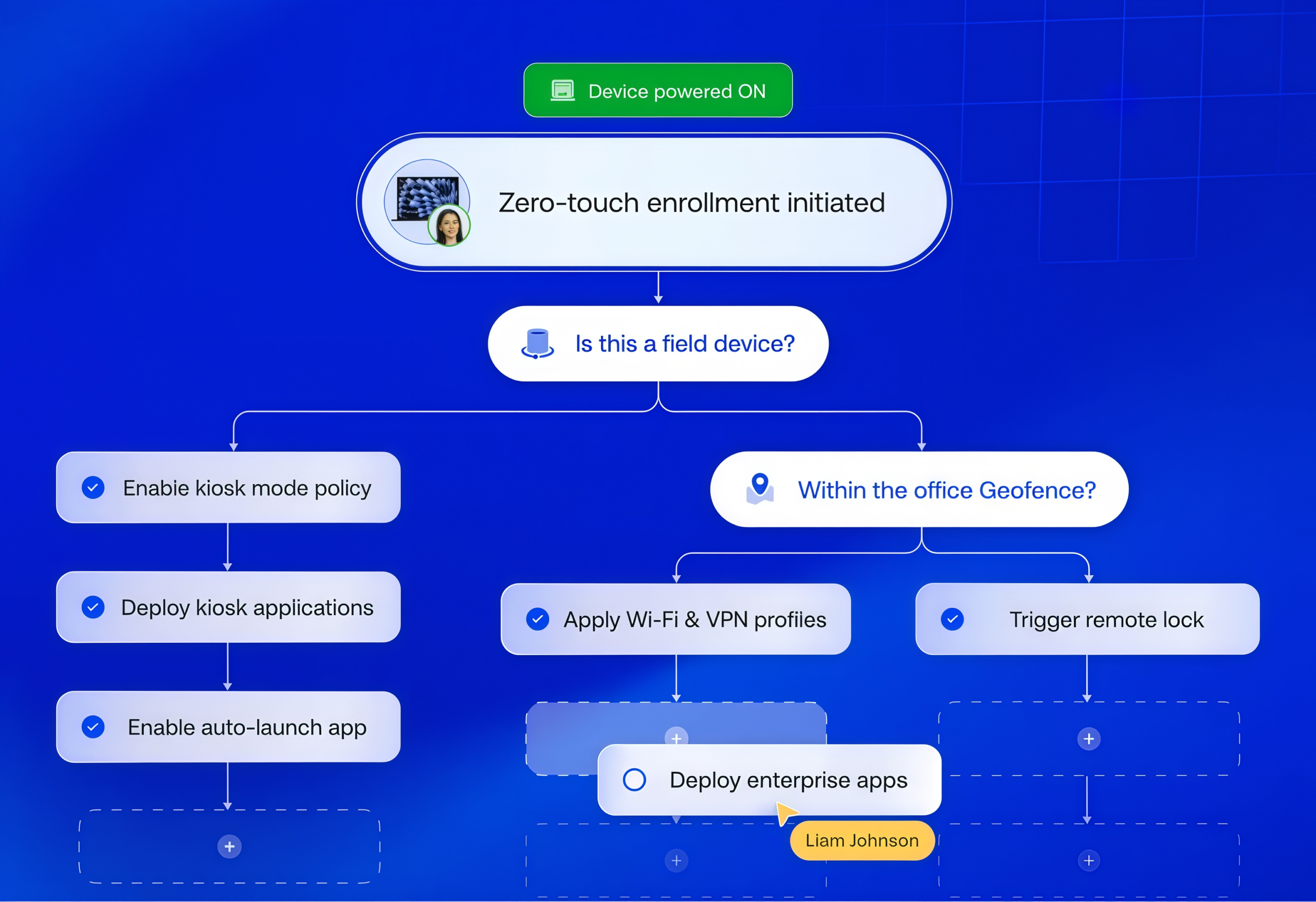
In environments facing IT skill shortages or limited staffing, automation is a practical way to scale device management operations without increasing operational complexity.
Hexnode provides an extensive Help Center that includes:
These structured resources allow IT teams to self-serve information during setup and ongoing management.
In mature markets such as Germany, the UK, and the United States, endpoint management decisions are rarely made impulsively. IT leaders are expected to justify investments with structured rollout plans, predictable outcomes, and minimal operational risk.
Three priorities consistently shape buying decisions in these regions:
Onboarding anxiety typically arises when these elements are unclear.
For buyers in mature markets, ease of adoption is not about cutting corners; it is about reducing unpredictability.
If you’re evaluating a new UEM solution and want to experience how streamlined enrollment and migration can work in practice, consider starting a Hexnode free trial or scheduling a personalized product demo.
Seeing the deployment workflows firsthand can provide the clarity needed to move forward with confidence.
Start your free 14-day trial or schedule a personalized demo today.
Start Free Trial