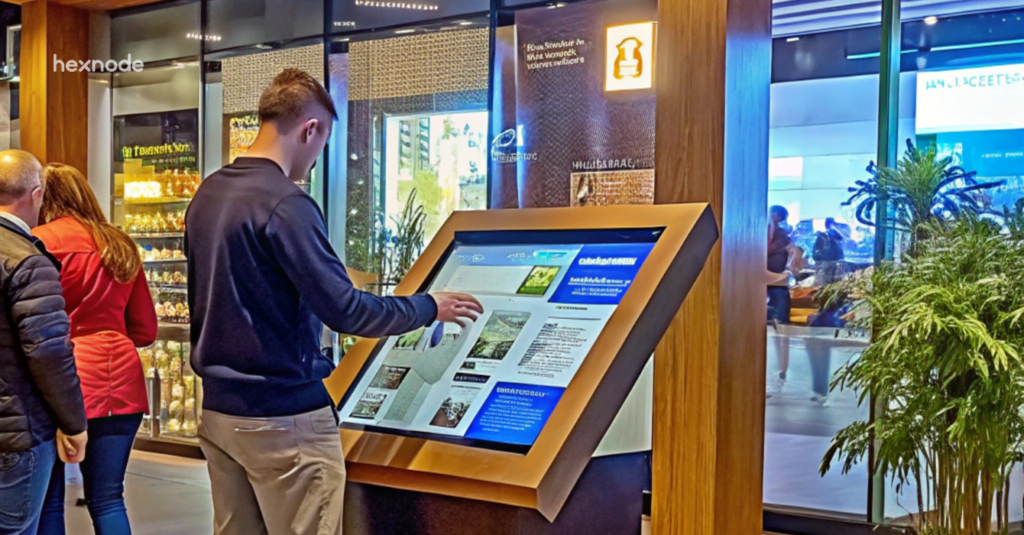
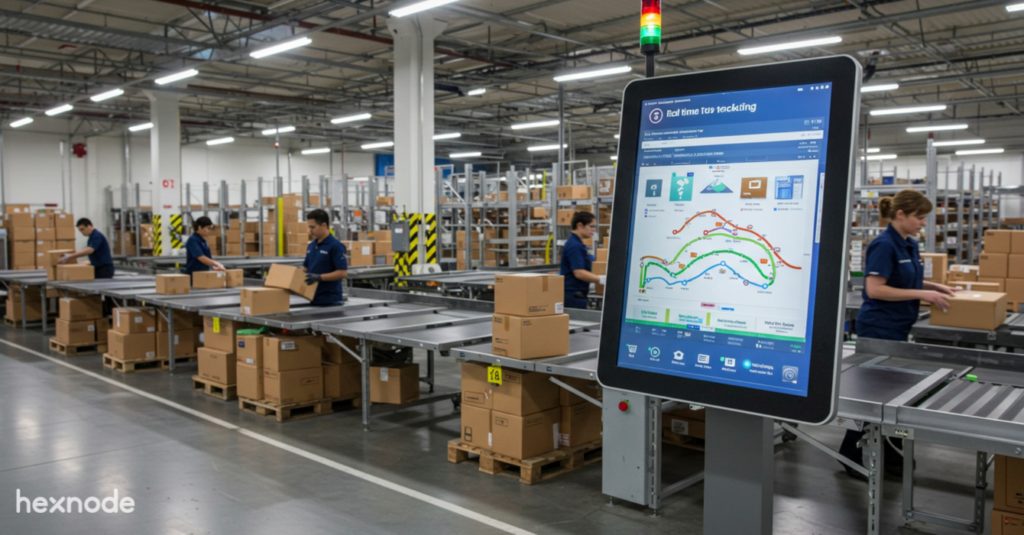
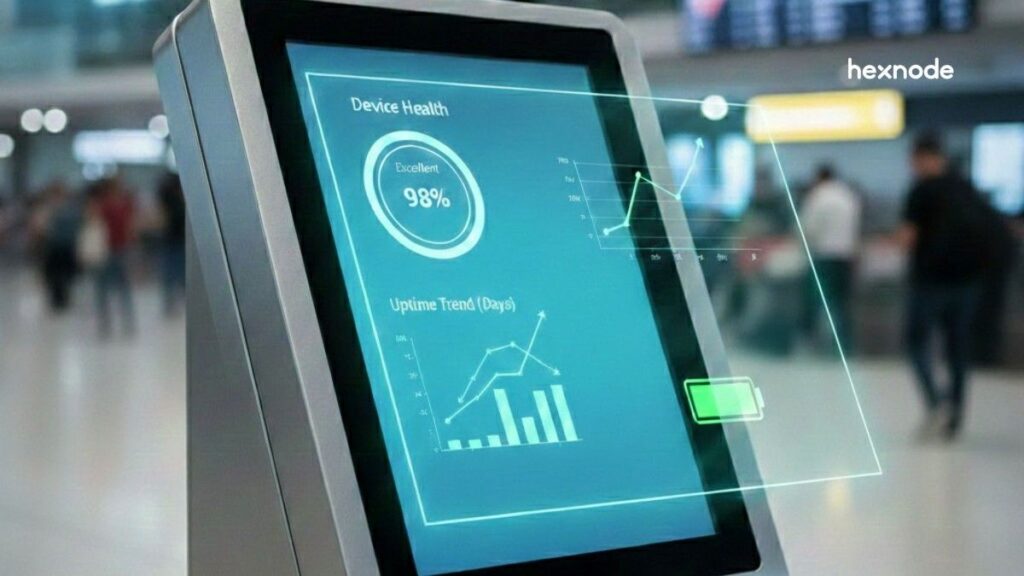
Kiosk management evolved from Era 1.0 (Hardware-Dependent Terminals) to Era 3.0 (Intelligent, Cloud-Managed Endpoints) driven by Unified Endpoint Management (UEM). UEM transforms basic lockdown into a strategic asset by providing Cross-Platform Consistency, Remote Troubleshooting capabilities, and Centralized Compliance Auditing. This shift drastically lowers the Total Cost of Ownership (TCO) while enabling sophisticated use cases like self-service and digital signage at scale.
Every tablet used for inventory, every phone used for POS, and every screen used for digital signage represents a massive asset—or a massive liability. These dedicated devices serve as the frontline of modern business, interacting directly with customers and keeping operations moving. However, as companies rush to embrace the latest kiosk innovation, they often overlook the complexity of managing these endpoints. If you do not control them, they potentially turn profit centers into significant security risks.
Understanding the kiosk origin and its evolution helps explain why device management has become so critical. In the past, IT teams managed these devices manually. They physically updated software, fixed glitches individually, and hoped for the best regarding security. This approach proved expensive, slow, and insecure. Today, inefficiency is a competitive disadvantage. You cannot afford downtime or data breaches when your customers expect instant service. Manual management simply no longer works in a world that demands speed, precision, and constant uptime.
Unified Endpoint Management is one of the key technologies that made kiosk management more centralized, proactive, and scalable by bringing different endpoint types under a common management platform. UEM empowers you to configure, secure, and monitor thousands of devices remotely from a central console. It transforms scattered hardware into a cohesive fleet, ensuring your technology drives growth rather than creating operational headaches.
The kiosk origin traces back to purpose-built terminals using proprietary, embedded, DOS-, Unix-, Windows-, or Linux-based systems, often installed in durable physical enclosures. Developers wrote dedicated code specifically for that exact machine, creating a rigid ecosystem. Vendors built them on proprietary hardware, meaning you bought the software and the metal box from the same source. Early kiosk security often placed heavy emphasis on physical protection and local access controls, although transaction-oriented systems such as ATMs also adopted cryptographic protections for sensitive financial data well before the modern cloud era.
Key Limitations
High Cost: These units demanded a massive upfront investment. Businesses faced high Capital Expenditures (CapEx) just to get started. Once you bought a terminal, you stayed stuck with that vendor. Changing software often meant ripping out the entire machine, creating a severe vendor lock-in that stifled flexibility and drained budgets.
No Remote Management: This era relied entirely on the “truck roll.” If a screen froze, a peripheral failed, or the software needed an update, an IT technician physically traveled to the device. One simple glitch often resulted in days of downtime. IT teams fixed problems only after they happened, operating in a purely reactive “break/fix” loop that wasted time and money.
Security Risk: Despite their rugged exteriors, the software often remained vulnerable. These terminals frequently ran on outdated operating systems because updating them proved so difficult and risky. Security relied on basic local controls, leaving the system exposed to anyone who could bypass the physical lock, access the ports, or exploit unpatched software vulnerabilities.
The Early MDM Patchwork
The next phase of the kiosk origin story emerged around 2010, when consumer tablets such as Apple’s iPad and the first Android tablets entered enterprise environments, prompting organizations to expand mobile device management beyond smartphones. IT teams attempted to manage these lighter, cheaper devices using rudimentary Mobile Device Management (MDM) tools. This resulted in the “Early MDM Patchwork.”
Administrators tried to apply basic lockdowns to prevent users from playing games or surfing the web. However, these early tools proved too fragmented for serious enterprise use. Early MDM platforms primarily focused on managing and securing mobile devices, with capabilities that varied by vendor, operating system, ownership model, and deployment period. Early MDM platforms provided basic security and configuration controls, but their support for operating-system updates, peripherals, applications, and dedicated-device workflows was often less extensive and more platform-dependent than modern management tools.
The Definitive Guide to Kiosk Management and Strategy (2026 Edition)
Master kiosk management for secure, efficient device deployments.
Era 2.0: The UEM Transformation (Cloud-Native Control)
This era marks a major turning point in the kiosk origin story, where centralized management strategies began replacing fragmented approaches. By embracing cloud-native technology, businesses gained the real-time visibility and control needed to manage diverse device fleets at scale, regardless of location.
The Shift to Unified Endpoint Management (UEM)
The arrival of Unified Endpoint Management (UEM) marked another important milestone in the kiosk origin and its progression toward centralized enterprise control. UEM gives IT teams the power to manage Kiosk mode across iOS, Android, and Windows from a single console. This helps reduce tool sprawl by allowing many organizations to manage multiple operating systems from a unified management platform instead of maintaining separate management tools. A centralized console can simplify fleet administration, but administrators still require platform-specific knowledge because enrollment, policies, applications, updates, and supported controls differ by operating system.
Hexnode UEM Solution
Hexnode solves the complexity of multi-OS environments by unifying the workflow. Hexnode lets administrators manage kiosk deployments across supported platforms from one console, but they must configure the appropriate platform-specific kiosk payloads and related settings within the policy. Whether you deploy an iPad for a greeter or an Android rugged device for a warehouse packer, Hexnode ensures consistent security and user experience without requiring you to write unique scripts for each platform.
Advanced Policy Granularity
Compared with the kiosk origin, modern kiosk management goes far beyond simply hiding games or restricting basic device functions. It shifts the focus to detailed, contextual controls that define exactly how a device behaves in specific scenarios.
Peripheral Control: Administrators can configure supported platform-specific restrictions for hardware features such as USB access, cameras, microphones, Bluetooth, hardware buttons, and other peripherals, depending on the device platform and management mode.
Settings Lockdown: Administrators can restrict supported device settings, navigation controls, network options, and reset functions based on the operating system, enrollment method, and kiosk configuration.
Geofencing: Some UEM platforms can use geofencing to trigger policy changes, such as enabling kiosk restrictions, when a device enters or leaves a predefined geographic area. For example, a driver’s tablet functions fully while on the road but instantly locks into a restricted Kiosk mode the moment it enters the warehouse perimeter, ensuring focus on inventory tasks.
The Rise of the Kiosk Browser
With the shift to web-based apps, the browser has emerged as a critical weak link. Specialized UEM Kiosk Browsers allow IT teams to whitelist for specific web domains and block all external navigation and address bars. This functionality turns a standard tablet into a secure Single-App Web Kiosk, perfect for internal portals or patient check-ins. It also supports Multi-App Kiosk setups, giving employees safe access to multiple web apps without opening the door to the public internet or social media distractions.
Featured Resource
The Ultimate Guide to Kiosk Management
Explore kiosk management strategies to securely configure, deploy, and manage dedicated business devices.
Strategic Benefits: How Modern Kiosk Management Drives ROI
The evolution from the kiosk origin to modern management strategies does more than secure hardware; it can also improve operational efficiency and your bottom line. By automating routine tasks and maximizing uptime, UEM turns your device fleet into a high-performance asset rather than a maintenance burden.
Reducing Operational Overhead and TCO
Zero-Touch Deployment: Supported automated enrollment programs can enroll eligible devices during initial setup and apply assigned Hexnode apps and policies. When a compatible kiosk policy is associated, the device can subsequently be configured for kiosk use without manual on-device setup.
Remote Troubleshooting: Downtime kills profitability. Hexnode provides Remote View and Remote-Control capabilities for supported Android, ChromeOS, Linux and Windows devices, subject to platform-specific prerequisites and limitations; iOS devices support Remote View. For example, Linux Remote Control requires X11, while ChromeOS remote access uses Google Remote Desktop and requires device-side screen-sharing approval. Administrators can also perform supported platform-specific actions, such as restarting eligible devices or clearing app data on compatible devices. This capability reduces the need for expensive on-site technician visits and keeps your operations running smoothly.
Minimizing Security and Compliance Risk
Compliance Auditing: Strict industries require strict proof. Kiosk mode can help organizations support regulatory security requirements by restricting device functionality and limiting unauthorized access, but it represents only one component of a broader compliance program.
Data Protection: Security automation protects your reputation. You can configure automated session timeouts to clear user data immediately after an interaction ends. Furthermore, if a thief steals a public kiosk, administrators can instantly trigger a remote wipe command, rendering the hardware useless and the data inaccessible.
Maximizing User Focus and Productivity
Eliminating Distractions: By locking devices to only task-essential applications (Single or Multi-App mode), you guarantee that employees and customers use the hardware solely for its intended business function. This helps minimize distractions by restricting access to non-business applications and websites, allowing users to remain focused on their assigned tasks.
Enhanced Customer Experience: Nothing frustrates a customer like a broken screen. By preventing unauthorized app installations and configuration changes, organizations can significantly improve the stability and consistency of public-facing devices. This reliability builds trust and ensures a seamless, professional interaction every time a customer approaches your kiosk.
The Hexnode UEM Kiosk Advantage
As enterprises move further from the kiosk origin of isolated, hardware-dependent systems, choosing the right platform becomes critical for managing increasingly complex device fleets. Hexnode delivers a distinct competitive edge by combining powerful, enterprise-grade features with an architecture designed to simplify even the most complex deployment scenarios.
Built for Scalability and MSP Efficiency
Multi-Tenant Architecture: Hexnode builds its platform specifically for scale. For Managed Service Providers (MSPs), operational efficiency drives profit. Hexnode UEM MSP provides a multi-tenant management framework with isolated tenant portals and a centralized dashboard. Global administrators can use a single login to oversee tenant status, licensing, platform distribution and compliance health, and then access the relevant tenant portal to manage its kiosk policies and devices.
Policy Consistency Across OSes: Complexity drops when you control everything from one place. Hexnode supports centralized kiosk management across Android, iOS/iPads, Windows, AppleTV and macOS. Administrators must configure the relevant platform-specific kiosk settings, and supported apps, restrictions, layouts and customization options vary by operating system. Centralized management can improve operational consistency, but administrators must configure and test the appropriate platform-specific kiosk payloads, restrictions, applications, and layouts for each supported operating system.
UEM is the Bridge to XDR
Security is all about layers, and Hexnode UEM can enforce preventive endpoint controls, including kiosk restrictions, while Hexnode XDR monitors supported endpoints for behavioral threats and provides threat detection and response. Hexnode can correlate XDR telemetry with UEM context, such as device compliance status, user identity and location, to support security investigation and remediation.
FAQs
How do you choose between Single App and Multi App Kiosk mode?
The right kiosk configuration depends on the device’s purpose. Single App Kiosk mode works best for customer-facing devices that run only one application, such as self-service check-in terminals, digital menus, or ticketing kiosks. Multi App Kiosk mode suits employee workflows that require access to a limited set of approved applications, such as inventory management, field service, or warehouse operations.
Can existing tablets and smartphones be converted into kiosk devices?
Yes. Many organizations repurpose compatible Android, iOS, Windows, and macOS devices by enrolling them in a Unified Endpoint Management (UEM) solution and applying kiosk policies. This approach extends device lifespan, reduces hardware costs, and enables businesses to deploy dedicated kiosks without investing in proprietary hardware.
Conclusion
From the kiosk origin of standalone, hardware-dependent systems, kiosk management has evolved into intelligent, cloud-managed endpoint operations that support modern businesses. With Unified Endpoint Management, organizations can deploy, secure, monitor, and maintain kiosk fleets at scale from a single platform. This shift reduces operational complexity, improves security, minimizes downtime, and supports a wide range of use cases—from self-service kiosks to digital signage. As businesses continue expanding their endpoint fleets, centralized kiosk management has become essential for maintaining efficiency, consistency, and long-term return on investment.
Modernize Kiosk Management With Hexnode
Build secure, flexible, and purpose-driven kiosk experiences with Hexnode UEM.
Content writer at Hexnode. Fueled by good coffee and the occasional cat cuddle, I enjoy crafting content that informs, connects, and resonates. Nothing excites me more than knowing my words have been read, appreciated, and maybe even bookmarked.