BleepingComputer reported that hackers compromised 19 PyPI packages in a new Shai-Hulud supply-chain campaign.
The affected packages are science-focused and include bioinformatics tools such as Dynamo, Spateo, CoolBox, U-FISH, and Napari-UFISH.
Socket said the campaign involved 37 malicious releases across 19 packages that appeared to come from a single maintainer.
The malicious artifacts included a *-setup.pth file and an obfuscated JavaScript payload named _index.js.
The .pth startup hook can execute when Python starts, including during pip runs, test runs, notebook kernels, CI jobs, or package-management commands.
The payload attempts to download the Bun JavaScript runtime from GitHub to run the bundled JavaScript.
The malware targets GitHub tokens, GitHub Actions secrets, npm tokens, PyPI tokens, RubyGems tokens, JFrog tokens, AWS credentials, GCP credentials, Azure credentials, Kubernetes credentials, Vault credentials, SSH keys, Docker credentials, .env files, shell histories, and Claude or MCP configuration files.
The primary exfiltration method uses automatically created GitHub repositories, while a secondary HTTPS method points to an Anthropic API-looking endpoint likely used for camouflage.
The malware includes evasion checks for Russian environments and StepSecurity Harden-Runner, and persistence through Linux systemd services, macOS LaunchAgents, GitHub workflow files, and Claude or MCP configuration files.
Socket recommended rotating all secrets and restoring affected environments from safe backups if impacted packages were installed.
A newly identified Shai-Hulud software supply-chain campaign has compromised multiple scientific and bioinformatics packages hosted on PyPI, exposing a risk that extends far beyond individual developer workstations. By abusing Python’s startup mechanisms, the malware can execute automatically in environments where affected packages are installed, including development systems, notebook environments, and CI/CD pipelines.
The campaign highlights a persistent challenge in modern software development: trusted open-source dependencies often have access to the same repositories, cloud environments, and secrets that organizations rely on to build and deliver applications. When a compromised package gains execution within these environments, it can become an entry point for credential theft, repository compromise, cloud account abuse, and downstream supply-chain attacks.
For organizations that support research workloads, developer platforms, or Python-based automation, the incident serves as another reminder that dependency security is now a core component of enterprise security strategy, not merely a software development concern.
How the Shai-Hulud Supply-Chain Attack Works
The campaign leverages Python’s .pth startup hook mechanism, a legitimate feature that allows code to execute automatically when the Python interpreter initializes. Once a compromised package is installed, the malicious .pth file can trigger during routine Python activity, including interactive sessions, notebook launches, package-management operations, automated testing, and CI/CD workflows.
After execution, the malware attempts to download the Bun JavaScript runtime from GitHub and use it to run an obfuscated JavaScript payload named _index.js. This approach allows attackers to move much of the malicious logic outside the Python package itself, making analysis and detection more difficult while enabling rapid updates to payload behavior.
The payload is designed to harvest a broad range of credentials and sensitive artifacts commonly found on developer endpoints and build infrastructure, including:
Source code repository credentials and access tokens
CI/CD secrets and automation workflow data
Cloud provider credentials across AWS, Google Cloud, and Microsoft Azure environments
Package registry tokens used for software publishing
SSH keys, environment files, and shell history data
Container, Kubernetes, and secrets-management artifacts
AI development tooling configurations, including Claude and MCP-related settings
The malware also incorporates persistence techniques intended to survive beyond the initial execution. Reported mechanisms include:
Creation of systemd services on Linux systems
Deployment of LaunchAgents on macOS devices
Modification of GitHub Actions workflow files
Alteration of Claude and MCP configuration files to maintain access and enable continued execution
From a defender’s perspective, the most significant aspect of the attack is not the malware’s complexity but its positioning. By executing inside trusted development and automation environments, the malicious package can access the same credentials, repositories, and infrastructure resources that organizations depend on to build and deploy software. This significantly increases the potential impact of a single compromised dependency.
Featured Resource
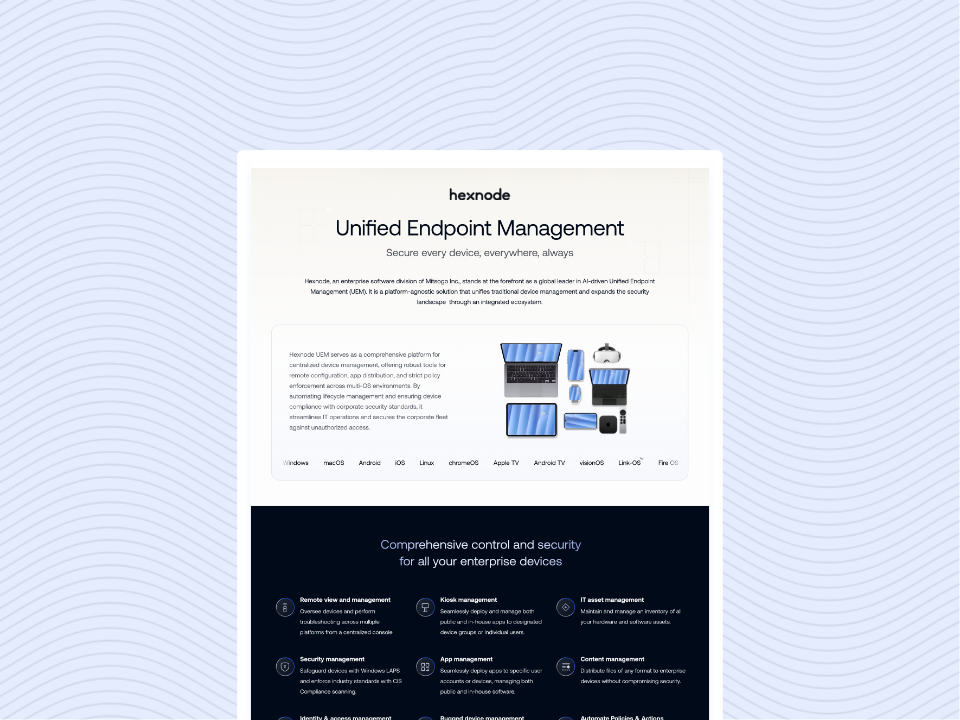
Hexnode UEM Capability Statement
Download the capability statement to get a quick glimpse into Hexnode's capabilities and features.
A compromise like Shai-Hulud is difficult to detect through preventive controls alone because the malicious code executes inside trusted developer and automation environments. Organizations need visibility into suspicious behavior after package installation, as well as the ability to quickly investigate and contain affected endpoints.
Hexnode XDR can help security teams identify and investigate indicators associated with this type of attack, including:
Unusual Python process activity originating from development or research environments
Unexpected execution of secondary runtimes or tools, such as Bun
Suspicious credential-access behavior targeting local files, tokens, or configuration stores
Attempts to establish persistence on managed endpoints
Abnormal outbound connections and potential data exfiltration activity
Process, file, and network events that may indicate post-compromise activity
By correlating endpoint telemetry across managed devices, security teams can gain greater visibility into potentially malicious behavior and accelerate incident investigation and response workflows.
On the device management side, Hexnode UEM can help strengthen the security posture of developer and research workstations through centralized endpoint governance. Key controls include:
Enforcing device compliance and security policies
Maintaining patch and update compliance across supported endpoints
Applying and monitoring full-disk encryption policies
Managing approved applications and endpoint configurations
Performing remote actions and remediation tasks from a centralized console
Supporting endpoint management across Windows, macOS, and Linux environments
These capabilities help reduce the attack surface of developer systems and improve an organization’s ability to respond quickly when a software supply-chain incident affects managed endpoints.
UEM Incident Management: From Monitoring to Remediation with the New Incidents Tab
Hexnode’s Incidents tab centralizes incident tracking, ownership, and remediation from a single console.
Conclusion
The Shai-Hulud campaign underscores how software supply-chain risk extends beyond traditional enterprise applications. Open-source packages used in research, development, data science, and automation workflows often operate in environments that contain highly privileged credentials, making them attractive targets for attackers.
The incident also demonstrates how a single compromised dependency can create opportunities for credential theft, repository compromise, cloud environment exposure, and downstream operational risk. As organizations continue to rely on open-source ecosystems, securing the software supply chain must remain a shared responsibility across security, platform engineering, and development teams.
To reduce exposure, organizations should prioritize:
Dependency governance and package-source monitoring
Continuous endpoint visibility and threat detection
Rapid credential and secret rotation following suspected compromise
Hardened developer and research workstations
Strong controls around CI/CD pipelines and cloud access credentials
For security leaders, the lesson is clear: protecting enterprise assets now requires the same level of scrutiny for third-party dependencies as it does for endpoints, identities, and cloud infrastructure.
Try Hexnode Free for 14 Days
Strengthen your defenses against supply-chain threats with unified endpoint security, visibility, and response from Hexnode.
I’m a technical content writer at Hexnode who loves simplifying tech. I break down complex ideas, remove the fluff, and help readers clearly understand our product for what it actually is: simple, reliable, and built to solve real problems.