How to choose a UEM solution that fits all your digital signage needs?
Here is a guide to choosing a UEM solution for effective digital signage management and control.

Get fresh insights, pro tips, and thought starters–only the best of posts for you.
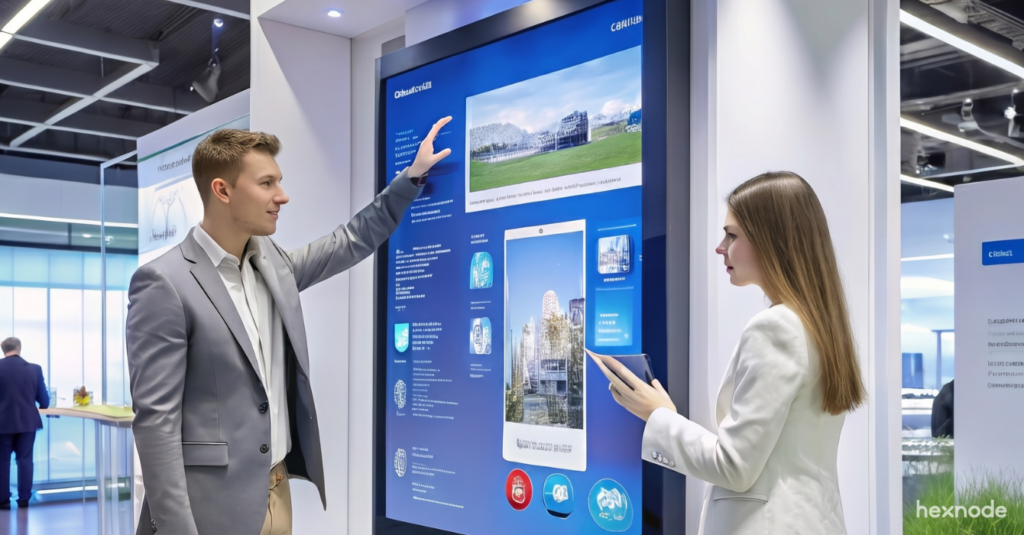
Enterprises rely heavily on digital displays to deliver content, enable customer interactions, and support operational workflows. From retail stores to corporate offices, these endpoints have become business-critical assets.
However, as deployments grow, managing these devices becomes increasingly difficult. IT teams struggle with maintaining consistent configurations, preventing misuse, and ensuring secure access across multiple locations.
Without a structured approach, digital displays can quickly turn into unmanaged endpoints that increase operational overhead and risk.
This is where digital display endpoint management becomes essential. Organizations need a reliable way to control, secure, and monitor every device from a central point.
A well-defined strategy supported by robust digital signage management software ensures that devices operate as intended while minimizing complexity.
Digital display endpoint management refers to the centralized control, configuration, and monitoring of devices such as tablets, smart TVs, phones, laptops, and other display-driven systems across an organization.
These endpoints are often deployed for specific purposes such as displaying content, enabling transactions, or guiding users through workflows. Managing them effectively requires more than basic device oversight. It involves enforcing strict usage policies, controlling applications, and maintaining consistent configurations across all devices.
A key component of digital signage device management is ensuring that each device serves a defined function. This is achieved by restricting access to only the necessary applications and features. By doing so, organizations eliminate unnecessary interactions and maintain operational focus.
As deployments expand across multiple locations, maintaining visibility and control over every device becomes increasingly difficult. This rapid growth introduces operational challenges that require structured and centralized management.
Organizations deploy digital displays across multiple branches, stores, and facilities. As the number of devices grows, maintaining visibility and control becomes increasingly difficult. Without centralized management, IT teams cannot track device status or enforce consistent policies.
Inconsistent Device Usage: When devices are not properly restricted, users may access unintended applications or settings. This leads to inconsistent behavior across endpoints and reduces their effectiveness in delivering intended outcomes.
Digital signage management software acts as the control layer for managing distributed display endpoints. It enables organizations to configure, monitor, and secure devices from a centralized interface.
A robust solution provides centralized device control, allowing IT teams to manage all endpoints from a single console. This eliminates the need for manual intervention and ensures consistency across deployments.
Key capabilities include:
These capabilities are essential for organizations operating across multiple locations and managing devices at scale.
Managing large fleets of display endpoints requires enforcing strict usage boundaries to maintain consistency and prevent operational drift. Converting devices into controlled environments ensures each endpoint delivers its intended function without deviation.
The most effective way to manage digital display endpoints is to convert them into interactable displays. This approach restricts devices to specific applications or workflows.
Hexnode enables organizations to configure devices in single app or multi app kiosk modes. This ensures that users can only interact with approved applications, eliminating distractions and misuse.
Centralized management provides complete visibility and control over all devices. IT teams can apply policies, monitor device status, and manage configurations from a unified interface.
Hexnode allows administrators to control devices remotely, ensuring consistent management across all endpoints.
Standardization ensures that every device operates in a consistent manner. By applying uniform configurations, organizations reduce errors and simplify troubleshooting.
This includes setting consistent policies, restricting access, and defining application usage across all devices.
Devices should only provide access to features that are necessary for their intended use. Restricting system settings and hardware controls prevents unauthorized actions.
By limiting functionality, organizations ensure that devices remain focused on their primary purpose and reduce the risk of misuse.
Many digital displays rely on web-based applications. Controlling web access is critical to maintaining security.
Hexnode provides a kiosk browser that allows access only to approved websites. This ensures that devices cannot be used to browse unauthorized content or access external resources.
Manual deployment of applications is inefficient at scale. Automation allows IT teams to install and update applications across all devices without physical intervention.
Hexnode supports remote application deployment and updates, ensuring that all endpoints remain up to date and operational.
Devices must remain in their configured state at all times. Any deviation from defined policies can lead to operational issues.
Hexnode ensures that devices remain locked into kiosk mode and continue to operate within defined parameters, even after it restarts.
Organizations often use devices across different operating systems. Managing these devices requires a solution that supports multiple platforms.
Hexnode supports Android, iOS, Windows, and tvOS devices, enabling consistent management across diverse environments.
Remote troubleshooting allows IT teams to diagnose and resolve issues without visiting physical locations. This reduces downtime and improves operational efficiency.
With remote management capabilities, administrators can quickly address issues and ensure uninterrupted device performance.
Each device should be configured based on its specific use case. Whether it is used for customer interaction, internal operations, or content display, the configuration must align with its role.
Hexnode enables organizations to tailor device configurations to match operational requirements, ensuring optimal performance and usability.
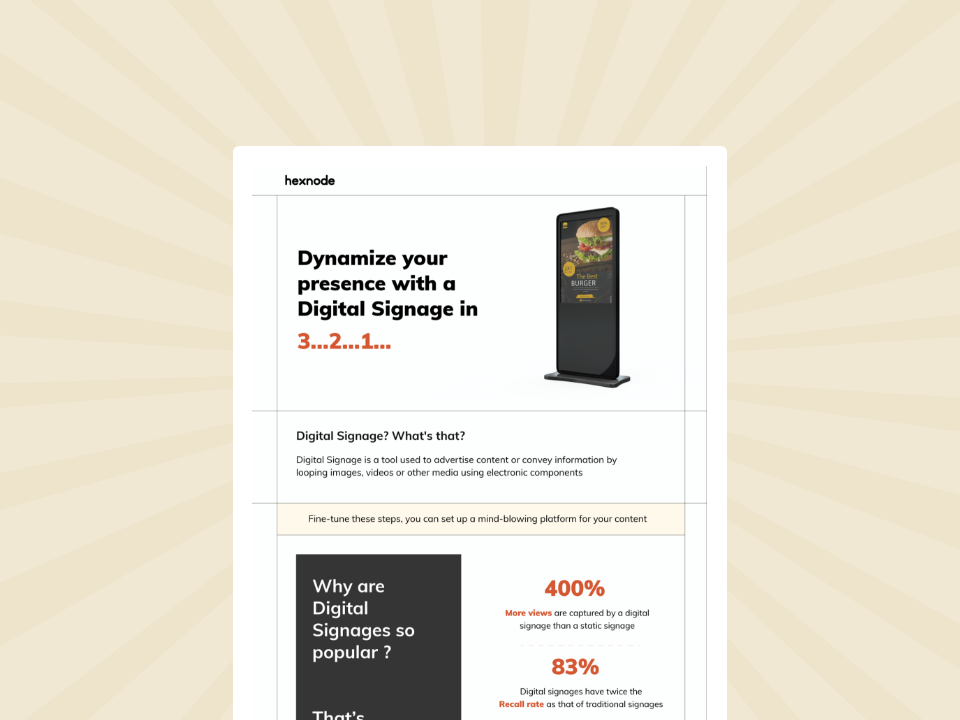
Learn more about implementing effective digital signage strategies for your business today.
Download the InfographicHexnode provides a unified platform that simplifies the management of digital display endpoints.
It allows organizations to convert standard devices into purpose-built kiosks, eliminating the need for specialized hardware. This approach reduces costs while maintaining control over device usage.
Centralized management ensures that all devices can be controlled from a single interface. Administrators can apply policies, monitor performance, and manage configurations efficiently.
Remote device management enables organizations to deploy and control devices without physical access. This is essential for scaling operations across multiple locations.
Hexnode also enforces secure device lockdown, restricting access to approved applications and workflows. This ensures that devices operate within defined boundaries and remain protected from misuse.
With cross-platform support, organizations can manage devices across different operating systems without additional complexity.
Allowing unrestricted device usage leads to inconsistent behavior and increases exposure to security risks, as users may access unauthorized applications or settings. This lack of control can compromise both device performance and intended functionality.
Relying on manual processes further slows down operations, especially in large-scale deployments. It introduces human errors, delays in configuration, and inefficiencies in maintaining multiple devices across locations.
Ignoring security measures leaves endpoints vulnerable to misuse, unauthorized access, and potential data exposure. Without enforced restrictions, devices can deviate from their intended purpose and become difficult to manage.
Lack of standardization creates inconsistencies in how devices operate, leading to uneven user experiences and increased troubleshooting complexity for IT teams.
Failing to adopt centralized management tools significantly limits visibility and control. Without a unified system, organizations struggle to monitor device health, enforce policies, and scale their digital display deployments effectively.
Managing digital display endpoints at scale requires a structured approach that prioritizes control, security, and efficiency.
By converting devices into displays and kiosks, enforcing centralized management, and standardizing configurations, organizations can ensure consistent performance across all endpoints.
Hexnode provides the necessary capabilities to simplify digital display endpoint management. With centralized control, remote management, and secure device lockdown, organizations can scale their deployments with confidence.
Simplify digital display endpoint management with Hexnode’s centralized control.
Start Your Free Trial!What is digital display endpoint management?
It is the process of managing, monitoring, and securing devices such as phones, TVs, and tablets from a centralized platform.
Why is digital signage device management important?
It ensures that devices operate consistently, remain secure, and deliver intended functionality across all locations.
How does kiosk mode help in managing digital displays?
Kiosk mode restricts devices to specific applications or workflows, preventing misuse and ensuring consistent operation.
What should digital signage management software include?
It should provide centralized control, remote management, application control, and security enforcement.
Can digital display endpoints be managed remotely?
Yes, organizations can deploy, monitor, and control devices remotely using centralized management solutions like Hexnode.