Human-in-the-Loop (HITL) AI automation combines AI efficiency with human oversight to improve decision-making and reduce risk. By applying appropriate permissions, approval workflows, and governance, organizations can automate routine tasks while ensuring that high-impact actions remain accountable, secure, and compliant.
Human-in-the-Loop (HITL) AI automation is an approach to designing AI-powered systems where people remain actively involved in the decision-making process. Instead of allowing AI to make and execute every decision independently, HITL introduces defined points where a human reviews, validates, modifies, or approves the AI’s recommendations before significant actions are taken. This combines the speed and scalability of automation with the judgment, context, and accountability that human decision-makers provide.
HITL sits between traditional automation and fully autonomous AI. Traditional automation follows predefined rules: if a specific condition is met, the system performs a predetermined action without interpretation. AI-assisted automation adds intelligence by analyzing data, identifying patterns, and generating recommendations, but people remain responsible for approving or acting on those recommendations. Fully autonomous AI goes a step further by making decisions and executing actions with little or no human intervention. HITL, by contrast, allows organizations to automate routine work while reserving human oversight for actions that involve higher risk, uncertainty, or business impact.
This model is becoming increasingly common across enterprise functions. In IT, AI can recommend software deployments or identify devices that require attention, while administrators approve the final action. HR teams can use AI to screen job applications before recruiters make hiring decisions. Customer support platforms can draft responses that agents review before sending, and cybersecurity teams can rely on AI to prioritize potential threats while analysts determine the appropriate response.
Although the terms are often used interchangeably, they describe different levels of human oversight.
Human-in-the-Loop (HITL) requires a person to participate directly in the workflow before certain actions are completed. The AI may generate recommendations or prepare an action, but execution depends on explicit human review or approval. This approach is well suited for high-impact decisions where accuracy, compliance, or accountability is critical.
Human-on-the-Loop (HOTL) places the AI in primary control of routine operations while a person supervises the system, monitors its performance, and retains the ability to intervene or override decisions when necessary. This model is often used when continuous automation is desirable but organizations still need human oversight for exceptions or unexpected situations.
Why Fully Autonomous AI Isn’t Always the Right Choice
AI has made significant advances in reasoning, pattern recognition, and task automation, but enterprise environments still require careful oversight. Unlike routine automation, AI systems interpret information probabilistically, which means they can occasionally generate inaccurate outputs, misinterpret context, or make recommendations based on incomplete or ambiguous data. Even highly capable AI models may struggle with situations that require organization-specific knowledge, regulatory awareness, or nuanced business judgment.
Another important consideration is that permissions do not equate to judgment. An AI system may have the technical ability to perform an action because it has been granted access, but that does not mean every action should be executed automatically. Determining whether an action is appropriate often requires evaluating business impact, compliance obligations, and potential downstream consequences—factors that are difficult to capture through permissions alone.
The cost of mistakes also increases as AI gains the ability to take direct action. An incorrect recommendation reviewed by a human may result in a minor delay, whereas an incorrect action executed automatically could disrupt operations, expose sensitive data, or create security and compliance issues. For this reason, enterprise organizations typically classify workflows by risk level and apply different levels of automation accordingly. Low-risk, repetitive tasks may be automated with minimal oversight, while higher-risk operations generally require human review before execution.
High-risk actions AI shouldn’t perform alone
Certain actions carry consequences that warrant explicit human approval before they are executed. Examples include:
Resetting passwords for privileged or administrative accounts.
Granting, modifying, or revoking privileged access permissions.
Disabling security controls or changing security policies.
Deploying software or configuration changes across large groups of managed devices.
Deleting sensitive business data or permanently removing critical resources.
These actions can have organization-wide implications if performed incorrectly. Incorporating human review into such workflows helps reduce operational risk, supports compliance requirements, and ensures accountability for decisions that significantly affect security or business continuity.
Featured Resource
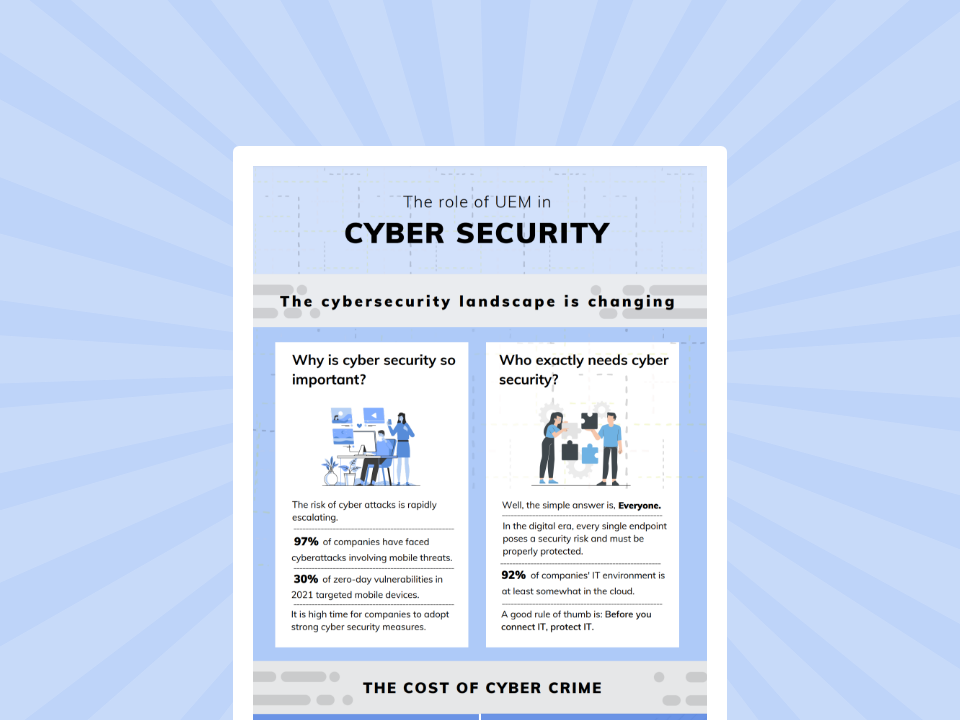
The role of UEM in cyber security
Learn how Unified Endpoint Management helps companies enhance cyber security.
As AI becomes capable of taking actions instead of simply generating recommendations, organizations must focus on what AI is allowed to do, not just what it is capable of doing. Even the most advanced AI system should operate only within clearly defined authorization boundaries. A well-designed permission model limits the potential impact of mistakes, misuse, or compromised AI workflows.
In practice, AI should never receive broader access than the person or process it represents. This principle helps organizations maintain control over automated actions while reducing unnecessary security risks.
Some key access control principles include:
Least privilege: Grant AI only the minimum permissions required to complete a specific task.
Role-based permissions: Restrict actions based on predefined roles and responsibilities rather than giving broad administrative access.
Separation of duties: Prevent a single AI workflow from completing multiple sensitive actions independently, such as both approving and executing a critical change.
Protection against privilege escalation: Ensure AI cannot obtain additional permissions or bypass established approval processes.
These principles are already widely used in enterprise IT and become even more important as organizations adopt AI-powered automation.
AI can only be as safe as its permission model
An AI system’s effectiveness depends not only on the quality of its model but also on the controls governing its actions. A strong permission model establishes clear guardrails that help ensure automation remains secure, accountable, and aligned with organizational policies.
Important components of a robust permission framework include:
Access boundaries: Clearly define which systems, applications, and resources the AI can access.
Delegated authority: Limit AI to performing actions that an authorized user or service account is permitted to carry out.
Approval hierarchies: Require human review before AI executes high-risk or business-critical actions.
Auditability: Maintain detailed logs of AI-generated recommendations, approvals, and executed actions to support investigations, compliance, and continuous improvement.
Rather than creating a separate permission model specifically for AI, organizations should integrate AI workflows into their existing IT governance framework. Aligning AI permissions with established identity, access, and approval policies promotes consistent security practices, simplifies administration, and helps ensure that automation follows the same governance standards as human users.
Where Human Review Creates the Most Value
Human review is most valuable where decisions have significant security, operational, financial, or regulatory consequences. Rather than slowing down automation, strategically placed approval checkpoints help organizations reduce risk while allowing AI to handle routine work efficiently.
Common scenarios where human review adds value include:
Security configuration changes that could affect system protection.
Compliance-sensitive actions involving regulated data or policy enforcement.
Device management tasks with organization-wide impact.
Employee onboarding and offboarding activities that affect access to business resources.
Customer-facing communications generated by AI for sensitive or high-priority interactions.
Financial approvals involving purchases, reimbursements, or budget changes.
By reserving human oversight for these higher-risk workflows, organizations can improve both efficiency and accountability.
Good candidates for automatic approval
Many low-risk, repetitive tasks can be safely automated with minimal oversight, such as:
Routine report generation.
Ticket categorization and prioritization.
Device inventory updates.
Low-risk policy recommendations that require no immediate enforcement.
Actions that should always require approval
Certain actions have far-reaching consequences and should require explicit human authorization before execution:
Wiping corporate devices.
Large-scale configuration or policy changes.
Identity or account modifications.
Granting or changing privileged access.
Sharing sensitive business data with external parties.
Introducing review gates for these actions enables organizations to automate repetitive operational tasks while ensuring that high-impact decisions remain subject to human accountability and organizational governance.
Building Effective Human-in-the-Loop Workflows
Successful Human-in-the-Loop (HITL) workflows are built on thoughtful governance rather than simply adding approval steps. The goal is to automate routine tasks while ensuring that higher-risk decisions receive appropriate human oversight.
A practical approach includes:
Define risk tiers: Categorize actions based on their potential impact on security, compliance, operations, or business continuity.
Add approval checkpoints: Require human review only for medium- and high-risk actions, avoiding unnecessary bottlenecks.
Create escalation paths: Route complex or exceptional cases to the appropriate stakeholders when additional expertise is needed.
Maintain audit logs: Record AI recommendations, human approvals, and executed actions to support accountability and compliance.
Continuously refine workflows: Review outcomes regularly and adjust approval thresholds as business needs and AI capabilities evolve.
A simple approval framework
Organizations can classify AI-driven actions into three categories:
Fully automated: Low-risk, repetitive tasks that can execute without human intervention.
AI recommends, human approves: Medium- and high-risk actions where AI provides recommendations, but a person makes the final decision.
Human-only decisions: Critical actions that require human judgment from start to finish, such as major policy changes or strategic business decisions.
Avoiding common mistakes
To build effective HITL workflows, organizations should avoid common pitfalls such as:
Requiring approval for every AI-generated action, which reduces efficiency.
Allowing AI to act without oversight in high-risk scenarios.
Granting overly broad permissions that exceed operational requirements.
Failing to maintain audit trails for AI-assisted decisions.
Overlooking rollback or recovery procedures if an automated action produces unintended results.
Ultimately, successful AI automation depends as much on strong governance, clear permissions, and well-designed review processes as it does on the capabilities of the AI model itself.
Top AI security risks every business should know in 2026
Learn how businesses can secure AI usage, endpoints, and sensitive data with Hexnode.
Designing AI Automation That People Can Trust with Hexnode
Responsible AI automation requires more than capable AI models—it depends on strong governance, visibility, and administrative control. While AI can help organizations make faster decisions and streamline repetitive tasks, IT teams still need confidence that automated actions align with security policies and organizational standards.
Hexnode can support these governance objectives by helping organizations maintain oversight of managed devices before administrative actions are taken. Administrators can define and enforce policies across enrolled devices, monitor device compliance, and perform remote management actions from a centralized console. This helps ensure that automation is applied within established operational controls rather than as an independent process.
Organizations can strengthen Human-in-the-Loop AI workflows by combining AI-driven recommendations with capabilities such as:
Centralized policy enforcement to apply consistent configurations and security policies across managed devices.
Compliance monitoring to identify devices that do not meet organizational security requirements before administrative actions are taken.
Remote administrative actions that remain under administrator control, allowing IT teams to review and initiate actions when appropriate.
Comprehensive audit and action history that records administrative activities, supporting governance, compliance reporting, and operational accountability.
By combining AI-assisted decision-making with policy enforcement, compliance visibility, and auditable administrative workflows, organizations can automate routine operations while retaining the human oversight needed for high-impact actions. This approach helps improve efficiency without compromising security, governance, or accountability.
Conclusion
AI has the potential to transform enterprise operations, but its greatest value comes from augmenting human expertise rather than replacing it. As organizations adopt AI-powered automation, success will depend not only on the intelligence of the models they use but also on the governance frameworks that guide their actions.
Permissions define what AI is authorized to do, while human review determines whether those actions are appropriate in a given context. Together, they provide the balance between efficiency and accountability that enterprise environments require.
Organizations that combine automation with clear approval workflows, least-privilege access, and risk-based governance will be better positioned to scale AI responsibly while maintaining security, compliance, and operational control. As AI systems become increasingly capable of taking action, future enterprise deployments are likely to rely less on unrestricted autonomy and more on human-centered oversight that ensures automation remains aligned with business objectives and organizational policies.
Try Hexnode Free for 14 Days
Build trusted AI automation with Hexnode's centralized device and policy management.
Not necessarily. A well-designed HITL workflow limits human review to medium- and high-risk actions, while allowing low-risk, repetitive tasks to run automatically. This approach preserves efficiency where it matters most and introduces oversight only when the potential impact justifies it.
How should organizations decide which AI actions need human approval?
A practical approach is to perform a risk assessment for each workflow. Factors such as business impact, regulatory requirements, sensitivity of the data involved, reversibility of the action, and potential security implications can help determine whether an action should be automated, reviewed, or handled entirely by a person.
Is Human-in-the-Loop AI only relevant for large enterprises?
No. Organizations of all sizes can benefit from HITL principles. Smaller businesses may use human review for financial approvals or customer communications, while larger enterprises often apply it to IT operations, security, compliance, and access management. The level of oversight should match the organization’s risk profile rather than its size.
Can Human-in-the-Loop AI help organizations meet regulatory requirements?
Yes. Many regulations emphasize accountability, transparency, and human oversight for decisions that significantly affect individuals or business operations. Incorporating approval workflows and maintaining audit records can help organizations support governance and demonstrate compliance, depending on the applicable regulatory framework.
Will organizations eventually eliminate human review as AI improves?
While AI capabilities will continue to advance, many enterprise decisions are likely to retain some level of human oversight. Actions involving legal obligations, financial risk, security, ethics, or strategic business decisions typically require human accountability, regardless of how capable AI becomes.
I’m a technical content writer at Hexnode who loves simplifying tech. I break down complex ideas, remove the fluff, and help readers clearly understand our product for what it actually is: simple, reliable, and built to solve real problems.