OpenMandriva sabotage allegations center on a contributor. This individual reportedly deleted part of a GitHub project repository. They also published an empty package to the Cooker development repository.
No public evidence shows that the incident affected stable releases. However, it proves that trusted administrative access can introduce software supply chain risk. This risk can emerge without malware or software vulnerability exploitation. The incident reminds organizations managing Linux environments to prioritize repository governance, package integrity, and software update security.
Key Takeaways from the OpenMandriva sabotage incident
The reported OpenMandriva sabotage incident involved the alleged misuse of privileged contributor access rather than an external cyberattack or the exploitation of a software vulnerability.
The reported empty package was published to OpenMandriva’s Cooker development branch, and there is no public evidence that stable releases were affected.
Publicly available information provides no indication that the incident involved malware, credential theft, data exfiltration, or an external threat actor.
The incident demonstrates why repository governance, package integrity, and software update security are critical to protecting the software supply chain.
Organizations managing Linux environments should combine staged software deployments, centralized endpoint management, and well-defined incident response processes to reduce operational risk.
Introduction
Open-source software depends not only on secure code but also on the trust placed in the people who maintain it. That trust came under scrutiny after OpenMandriva disclosed what it describes as an attempted OpenMandriva sabotage involving one of its contributors.
According to the project, the incident followed an internal dispute and allegedly involved the misuse of administrative privileges. The contributor is accused of deleting part of a project repository from GitHub and publishing an empty package to Cooker, OpenMandriva’s development branch. The package could have disrupted systems running the GNOME and COSMIC desktop environments. However, the contributor has publicly disputed the project’s account, leaving key aspects of the incident contested.
Unlike many software supply chain incidents, the reported actions did not involve malware or the exploitation of a software vulnerability. Instead, they allegedly stemmed from the misuse of trusted administrative access, demonstrating how weaknesses in repository governance, package integrity, and open source package security can disrupt trusted software distribution channels.
Summary:
OpenMandriva alleges that a contributor with legitimate administrative access deleted part of a GitHub repository and published an empty package to its Cooker development branch. Although there is no public evidence that stable releases were affected, the incident demonstrates how privileged repository access can introduce software supply chain risk.
How Trusted Access Became a Software Supply Chain Risk
Based on the information released by OpenMandriva, the incident involved the alleged misuse of legitimate administrative privileges rather than an external cyberattack. The contributor had previously been granted elevated access to help migrate and mirror the project’s repositories to a private OneDev instance.
According to OpenMandriva, the contributor allegedly deleted part of a GitHub repository containing years of development work and published an empty package to Cooker, the project’s development branch. The package reportedly included metadata that obsoleted packages for the GNOME and COSMIC desktop environments.
Although OpenMandriva warned that the package could have disrupted systems using those desktop environments, the project has not publicly confirmed whether any users installed it before removal. A later forum update stated that the deleted files had been restored and the repositories had been resynchronized. There is also no public evidence that stable OpenMandriva releases were affected.
Rather than relying on malware or exploiting a software vulnerability, the reported actions affected both a project repository and the software publishing process. The OpenMandriva sabotage incident demonstrates how privileged repository access can create software supply chain risk, reinforcing the importance of access controls, repository governance, and package integrity.
Featured resource
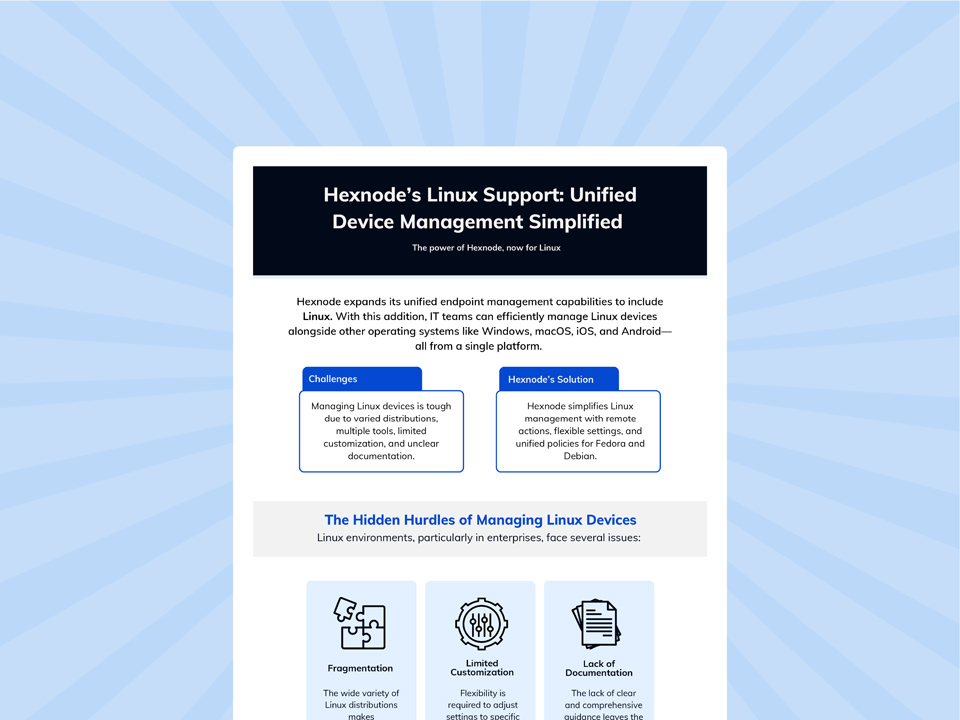
Hexnode’s Linux Support: Unified Device Management Simplified
Simplify Linux device management with unified endpoint management, centralized control, and automation.
What Remains Unclear in the OpenMandriva sabotage incident
Despite OpenMandriva’s public disclosures, several aspects of the incident remain unresolved.
The project has not confirmed whether any users installed the empty package before maintainers removed it. No public evidence shows that the incident affected the stable release channel. The incident involved deleting project repository content and publishing the reported package to Cooker, OpenMandriva’s development branch.
Publicly available information provides no indication that the incident involved malware, credential theft, data exfiltration, or an external compromise. Instead, the available evidence suggests that the reported actions stemmed from the alleged misuse of existing administrative privileges rather than an external attacker.
The contributor continues to dispute OpenMandriva’s allegations. Consequently, although OpenMandriva has publicly described the repository deletion and package changes, the motivation behind the reported actions remains contested.
Why This Matters for Enterprise Linux Environments
The OpenMandriva sabotage incident involved a community-maintained Linux distribution rather than an enterprise software vendor. However, its implications extend beyond a single project.
Organizations using open-source software depend on package repositories and software maintainers. They also rely on build infrastructure and software distribution pipelines. Together, these components form the software supply chain. This makes repository governance as important as code security.
The reported actions allegedly involved the misuse of legitimate administrative privileges instead of malware or a software vulnerability. Consequently, traditional security controls alone may not detect unauthorized package changes introduced through a trusted software distribution channel. Organizations should therefore strengthen governance across their software publishing and deployment processes.
For enterprise IT and security teams, the incident reinforces several best practices:
Apply least-privilege access to source code repositories and package publishing workflows.
Require peer review and approval before publishing sensitive repository or package changes.
Stage software updates and verify package integrity before broad deployment.
Maintain rollback procedures and trusted package mirrors to speed recovery if repository issues occur.
Monitor Linux endpoints after updates for unexpected application failures or configuration changes.
For organizations managing Linux environments, software update security extends beyond patch management. Strong repository governance, controlled software deployment, and centralized Linux endpoint management reduce software supply chain risk. These practices also improve resilience when disruptions affect trusted software distribution channels.
How Managing Linux with UEM Simplifies Operations for Distributed Teams
Learn how centralized Linux management improves governance and operational consistency across distributed environments.
How Hexnode Can Help Reduce Operational Risk
Although endpoint management cannot prevent disputes within an upstream open-source project, centralized Linux management and Required Apps policies can help IT teams deploy and maintain approved applications on managed Linux devices.
Hexnode UEM helps IT administrators centrally manage supported Linux devices, deploy required applications, and apply device policies and restrictions. If a required application is missing, the device becomes non-compliant, and Hexnode attempts to reinstall it during the next scheduled device scan.
Although no public evidence shows that the incident affected stable OpenMandriva releases, it reinforces an important lesson for enterprises. Securing the software supply chain requires protecting source code. Organizations must also protect the people, processes, and privileges. These elements build, validate, and distribute the software.
Organizations continue to rely heavily on open-source software. They must strengthen repository governance, package integrity, and update security. These actions reduce operational risk. They also build resilience against future supply chain incidents.
Strengthen Linux Endpoint Security with Hexnode
Centralize Linux device management, standardize software deployments, and maintain visibility across your enterprise with Hexnode UEM.
I write at the intersection of technology, process, and people, focusing on explaining complex products with clarity. I break down tools, systems, and workflows without any noise, jargon, or the hype.