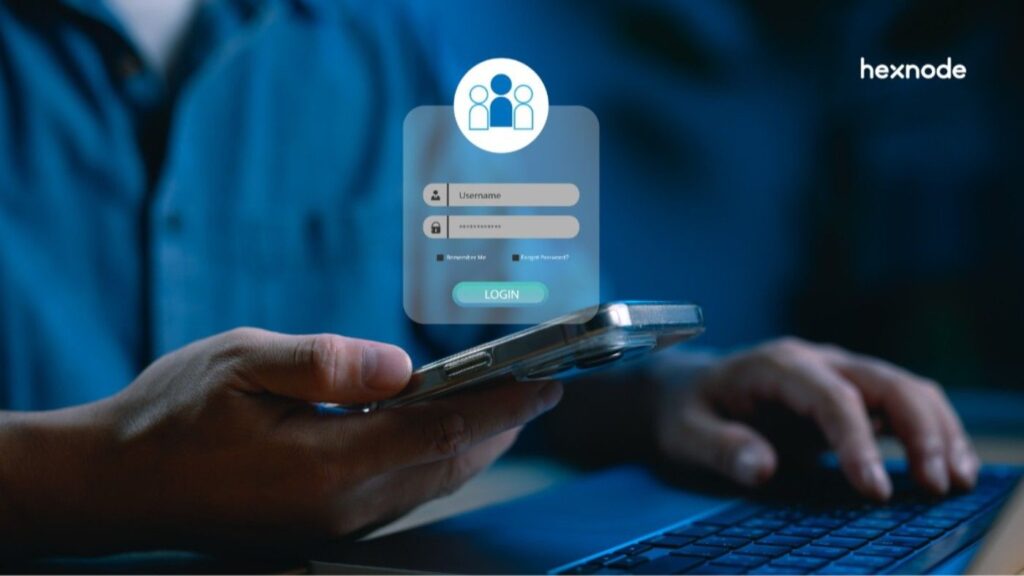
Identity as a Service (IDaaS) is a cloud-based identity and access management solution that centralizes authentication, authorization, and user lifecycle management. By enabling features like Single Sign-On (SSO), Multi-Factor Authentication (MFA), and automated provisioning, IDaaS helps organizations strengthen security, simplify access management, and support cloud-first and hybrid work environments.
When combined with device compliance and visibility—such as through Hexnode IdP—it enables more secure, context-aware access decisions across modern IT environments.
Identity as a Service (IDaaS) is a cloud-based Identity and Access Management solution that helps organizations manage user identities, authentication, and access permissions from a centralized platform.
Instead of relying solely on on-premises identity infrastructure, businesses can use IDaaS to securely control access to applications, data, and resources across distributed environments.
Traditional identity management systems were primarily designed for on-premises networks, where users and applications operated within a defined corporate perimeter.
As organizations adopted cloud applications, remote work models, and hybrid IT environments, managing identities through decentralized systems became increasingly complex. IDaaS emerged as a way to simplify identity management while improving scalability and accessibility.
By centralizing identity and access controls, IDaaS enables organizations to enforce consistent authentication policies, streamline user provisioning, and reduce administrative overhead. It also helps ensure that users can securely access the resources they need, regardless of their location or device.
As cloud-first and hybrid work strategies continue to evolve, Identity as a Service has become a key component of modern cybersecurity and access management frameworks.
Identity as a Service (IDaaS) works by centralizing identity management, authentication, and access control in a cloud-based platform. Instead of maintaining separate identity systems for different applications, organizations can manage user access through a single service that verifies identities and enforces security policies consistently across resources.
Identity Verification and Authentication
The process often begins with enrolling, synchronizing, or federating user identities so the IDaaS platform can manage authentication and access decisions across connected resources.
When a user attempts to access an application or resource, the IDaaS platform validates their identity using credentials such as usernames and passwords, along with additional authentication methods when required. These methods may include multi-factor authentication (MFA), biometric verification, or security keys, depending on the organization’s security requirements.
Access Authorization
Once a user’s identity has been verified, the IDaaS platform determines what resources they are allowed to access. This is typically based on predefined roles, groups, or access policies. By applying role-based or policy-based access controls, organizations can ensure that users receive only the permissions necessary to perform their responsibilities.
Continuous Identity Management
Identity management does not end after a successful login. IDaaS platforms continuously support access governance by monitoring user access, enforcing security policies, and managing identity lifecycle events such as onboarding, role changes, and offboarding. This helps organizations maintain appropriate access levels over time while reducing the risk of unauthorized access.
Core Features of an IDaaS Platform
Modern Identity as a Service (IDaaS) platforms provide a range of capabilities that help organizations manage user identities, secure access to resources, and simplify administration. While specific features may vary across providers, several core capabilities are commonly associated with IDaaS solutions.
Single Sign-On (SSO)
Single Sign-On (SSO) allows users to access multiple applications with a single set of credentials. Instead of signing in separately to each service, users authenticate once and gain access to authorized applications, improving both convenience and productivity.
Multi-Factor Authentication (MFA)
Multi-Factor Authentication (MFA) strengthens security by requiring users to provide two or more forms of verification before gaining access. This additional layer of protection helps reduce the risk of unauthorized access resulting from compromised credentials.
User Provisioning and Deprovisioning
IDaaS platforms often automate user lifecycle management by streamlining the creation, modification, and removal of user accounts. Automated provisioning and deprovisioning help ensure that employees receive appropriate access when they join the organization and that access is removed promptly when they leave or change roles.
Directory Services and Identity Repositories
Most IDaaS solutions maintain or connect to centralized directories that store user identities, attributes, and group information. These repositories serve as a single source of truth for authentication and access management processes.
Access Policies and Governance
Access governance capabilities help organizations define and enforce policies that determine who can access specific applications and resources. By applying consistent access controls and monitoring permissions over time, organizations can improve security, support compliance efforts, and simplify administration.
🔎 Quick Fact
The average employee today uses dozens of business applications. Without centralized identity management, IT teams often have to manage separate credentials and access permissions for each one, increasing administrative overhead and security risks.
Key Benefits of Identity as a Service
Identity as a Service (IDaaS) provides organizations with several security, operational, and administrative benefits, including:
Improved security posture: Centralized authentication and access controls help organizations enforce consistent security policies and reduce the risk of unauthorized access.
Reduced password fatigue: Features such as Single Sign-On (SSO) allow users to access multiple applications with fewer login prompts, improving the user experience.
Lower administrative burden: Centralized identity management can reduce helpdesk requests related to password resets and account access issues.
Scalability for growing organizations: IDaaS enables organizations to efficiently manage increasing numbers of users, applications, and access requirements without significant infrastructure investments.
Faster onboarding and offboarding: Automated user lifecycle management helps ensure employees receive the right level of access when they join, change roles, or leave the organization.
Better compliance and audit readiness: Centralized identity records and access controls provide greater visibility into user permissions and access activity, supporting governance and compliance efforts.
Stronger access governance: Identity controls become more effective when combined with broader organizational visibility and policy enforcement, helping maintain consistent security standards across the environment.
Hexnode Launches Hexnode IdP: A Native Identity Layer for Seamless Enterprise Security
Hexnode launches Hexnode IdP, unifying identity, device trust, and access control for stronger enterprise security.
Identity as a Service vs Traditional Identity Management
Traditional identity management systems were designed for on-premises environments. Organizations managed identity infrastructure using internally hosted servers and directories. These systems worked well for centralized office environments.
However, they became more complex to maintain as organizations adopted cloud applications and supported distributed workforces.
Identity as a Service (IDaaS) takes a cloud-based approach to identity management. It allows organizations to manage identities and access controls through a centrally hosted platform. This reduces the need to maintain dedicated identity infrastructure. It also makes it easier to scale access management across users, applications, and locations.
Feature
Traditional Identity Management
Identity as a Service (IDaaS)
Infrastructure
On-premises servers and directories
Cloud-hosted platform
Maintenance
Managed internally by IT teams
Managed primarily by the service provider
Scalability
May require additional infrastructure as needs grow
Designed to scale more easily with organizational growth
Accessibility
Often optimized for internal networks
Supports access across cloud and remote environments
Security Updates
Typically managed by internal teams
Generally delivered and maintained by the provider
For organizations embracing cloud-first strategies, IDaaS can offer greater flexibility, simplified administration, and improved accessibility compared to traditional identity management approaches.
Common Identity as a Service Use Cases
Organizations use Identity as a Service (IDaaS) to address a variety of access management and security challenges across modern IT environments.
Supporting Remote and Hybrid Workforces
IDaaS helps organizations provide employees with secure access to business applications regardless of location. Centralized authentication and access controls ensure a consistent user experience while maintaining security standards across distributed teams.
Managing Third-Party and Contractor Access
Many organizations work with external vendors, consultants, and contractors who require temporary access to specific resources. IDaaS simplifies the process of granting, modifying, and revoking access permissions based on business requirements.
Streamlining Employee Onboarding
Automated user provisioning enables new employees to gain access to approved applications and resources more quickly. This reduces manual administrative tasks and helps new hires become productive sooner.
Securing SaaS Application Access
As organizations adopt more cloud applications, IDaaS provides a centralized way to manage authentication and access policies across multiple SaaS platforms, reducing administrative complexity and improving visibility into user access.
Featured Resource
Hexnode IdP Solution Brief
Check out this solution brief for a quick glance into Hexnode IdP's capabilities.
Challenges and Key Considerations When Choosing an IDaaS Solution
While Identity as a Service (IDaaS) can simplify identity management and improve security, organizations should evaluate both implementation challenges and vendor capabilities before adoption.
Common challenges include:
Integrating the IDaaS platform with existing applications, directories, and workflows.
Migrating users and access policies from legacy identity management systems.
Meeting data privacy, security, and regulatory compliance requirements.
Managing user adoption and minimizing disruption during the transition.
Avoiding excessive dependence on a single vendor’s ecosystem.
When evaluating an IDaaS solution, consider the following:
Security capabilities: Support for strong authentication, access controls, and policy enforcement.
Scalability and reliability: Ability to support organizational growth and evolving access requirements.
Integration ecosystem: Compatibility with existing applications and IT infrastructure.
Administrative controls: Tools for managing users, permissions, and access policies.
Reporting and compliance support: Visibility into user access, authentication events, and audit requirements.
User experience: Simple and secure access for employees, contractors, and other users.
Identity management is most effective when it fits into a broader IT and security strategy.
Questions to ask before selecting a vendor:
Does the solution support future business growth?
How easily can it integrate with existing tools and workflows?
What visibility and reporting capabilities are available?
💡 Identity alone isn't enough
Modern Zero Trust security recommends verifying both the user and the device before granting access. That’s why many organizations combine identity platforms with device compliance and endpoint management to make more informed access decisions.
Strengthening Identity-Based Access with Hexnode’s Unified Device Visibility
Identity-based security is most effective when access decisions consider not only who the user is, but also the security and compliance status of the device being used.
As organizations support distributed workforces and a growing mix of corporate and personal devices, maintaining visibility into device health and compliance becomes increasingly important.
A broader approach to access management can help organizations:
Validate access requests using both identity and device compliance information.
Maintain consistent security controls across remote, hybrid, and in-office environments.
Reduce administrative effort through automated policy enforcement and compliance monitoring.
Improve audit readiness with greater visibility into device and access-related activities.
Hexnode supports this approach by helping organizations maintain visibility into managed devices and enforce compliance requirements across their environments. Administrators can define compliance criteria, monitor device compliance status, and use that information as part of access control workflows through supported integrations.
Device compliance monitoring can also help identify devices that no longer meet organizational requirements, enabling timely remediation and policy enforcement.
Hexnode IdP helps organizations strengthen identity-based access strategies by combining identity workflows with device visibility, compliance monitoring, and policy enforcement. This allows IT teams to maintain greater control over user access while supporting security and compliance objectives across distributed environments.
By combining identity-based access controls with device visibility, compliance monitoring, and automated policy enforcement, organizations can strengthen security, improve operational efficiency, and maintain greater control over access to corporate resources.
Conclusion
Identity as a Service (IDaaS) helps organizations centralize identity management, strengthen security, and simplify access control across modern IT environments.
As businesses continue adopting cloud applications and hybrid work models, IDaaS provides the scalability and operational efficiency needed to manage user access effectively. To maximize its value, organizations should evaluate identity management as part of a broader security strategy that combines visibility, control, and automation across the IT environment.
Frequently Asked Questions
Is Identity as a Service only useful for large enterprises?
No. Organizations of all sizes can benefit from IDaaS. Small and mid-sized businesses often use it to simplify identity management, improve security, and reduce the burden of maintaining on-premises identity infrastructure.
Can organizations use IDaaS alongside existing identity systems?
In many cases, yes. Organizations often integrate IDaaS with existing directories, applications, and identity management processes during a phased transition rather than replacing everything at once.
How does IDaaS help reduce security risks associated with remote work?
IDaaS provides centralized authentication and access controls, helping organizations apply consistent security policies regardless of where users are working. This makes it easier to manage access across distributed teams and cloud-based applications.
What happens to user access when an employee changes roles or leaves the organization?
IDaaS platforms can automate identity lifecycle processes, making it easier to update or remove access permissions as users change roles or leave the organization. This helps reduce the risk of unnecessary or outdated access privileges.
What should organizations prioritize when evaluating an IDaaS provider?
Organizations should consider factors such as security capabilities, scalability, integration support, administrative controls, reporting features, and how well the solution aligns with their existing IT environment and future growth plans.
Try Hexnode Free for 14 Days
Build a stronger security foundation with better visibility, control, and automation across your IT environment.
I’m a technical content writer at Hexnode who loves simplifying tech. I break down complex ideas, remove the fluff, and help readers clearly understand our product for what it actually is: simple, reliable, and built to solve real problems.