If you are evaluating the best UEM comparison, most platforms promise unified control but deliver complexity or ecosystem lock-in. Hexnode provides multi-platform endpoint management, automation capabilities, and tiered subscription plans, with available controls varying by platform, enrollment method, OS version, and edition.
Enterprise IT teams are under pressure to manage a growing mix of endpoints while maintaining strict security and compliance standards. Laptops, smartphones, tablets, rugged devices, kiosks, and remote workstations all demand centralized oversight. Yet many organizations still struggle to achieve consistent control across operating systems without increasing administrative complexity.
This is where the conversation around the best UEM comparison becomes critical. Enterprises do not just need feature lists. They need measurable control, predictable deployment, scalable architecture, and operational efficiency. Many unified endpoint management solutions claim to deliver all of this, but in practice, IT teams face fragmented policies, ecosystem constraints, licensing surprises, and steep learning curves.
Hexnode addresses these challenges directly. It delivers unified endpoint management that balances depth, flexibility, and cost efficiency. Hexnode enables IT teams to manage supported endpoint categories, including mobile devices, desktops, Apple TV devices, ChromeOS devices, Linux endpoints, visionOS devices, and supported Zebra printers.
When IT leaders conduct research for best unified endpoint management features comparison for enterprise deployment, they move beyond surface-level feature lists. They evaluate deployment maturity, automation depth, cross-platform consistency, and long-term operational scalability. Most IT leaders evaluate vendors such as Microsoft Intune, VMware Workspace ONE, Jamf, and other established platforms. Each solution has strengths, but they often align tightly with specific ecosystems.
Microsoft Intune offers multi-platform management and particularly deep integration with Microsoft Entra ID, Microsoft 365, Defender and the broader Microsoft cloud ecosystem.
Omnissa Workspace ONE UEM offers endpoint coverage and extensive deployment options. Organizations should evaluate whether its architecture, integrations and administrative model match their existing environment and operational resources.
Jamf specializes in Apple device management and is therefore most directly suited to Apple-centric environments rather than organizations seeking one UEM platform for a broad mix of operating systems.
Hexnode supports the centralized management of endpoints across multiple operating systems, including Android, iOS, iPadOS, macOS, Windows, ChromeOS, Linux, tvOS and visionOS. Enterprises can manage supported Windows, macOS, iOS, Android and ChromeOS endpoints from a centralized console, although available policies and enforcement mechanisms vary by platform and enrollment type. That neutrality allows IT leaders to design endpoint strategies around operational needs rather than vendor limitations.
Cross-Platform Depth That Goes Beyond Surface-Level Support
Many vendors advertise broad platform support, but depth matters more than surface compatibility. In any serious enterprise UEM comparison, policy granularity, automation flexibility, and configuration control separate leaders from average solutions.
Windows devices, including enrollment, policy, security, application, patch, kiosk and remote-management capabilities
macOS with granular configuration enforcement
iOS/iPadOS in supervised deployments
Android Enterprise across work profile, fully managed, and dedicated modes
Specialized endpoints such as kiosks and digital signage
Centralized policies and compliance monitoring can help organizations identify configuration drift and apply supported security controls across mixed endpoint environments.
Deployment Without Friction
Device deployment often exposes the difference between marketing promises and operational reality. Large-scale rollouts require automation, reliability, and minimal user intervention.
Hexnode supports zero-touch enrollment through integrations such as Apple Automated Device Enrollment, Android Zero-touch, and Windows Autopilot. These enrollment methods can automate device onboarding and enable assigned policies and applications to reach devices after they successfully enroll and communicate with Hexnode UEM.
In distributed workforce environments, this capability reduces onboarding delays and minimizes IT workload. Properly configured zero-touch enrollment can reduce device-side setup and help apply organizational configurations during onboarding.
Scalability also matters. Hexnode’s cloud-first architecture enables organizations to expand endpoint coverage globally without investing in heavy on-premises infrastructure. Enterprises gain centralized visibility and policy control regardless of geographic distribution.
Security and Compliance Built for Enterprise Risk Models
Security leaders evaluating unified endpoint management solutions prioritize visibility and enforcement. Policies must not only exist but actively prevent risk.
Hexnode strengthens endpoint security through:
Real-time compliance monitoring
Automated remediation actions
Conditional access enforcement
Remote lock and wipe capabilities
Application management and restrictions
These capabilities can help administrators identify non-compliant devices and initiate supported corrective or remote actions from the Hexnode console. Administrators can configure supported compliance-enforcement workflows to initiate selected actions when devices violate defined compliance requirements.
In regulated industries, audit readiness is equally important. Hexnode provides centralized dashboards and detailed reporting that help security teams demonstrate policy enforcement and device posture.
Hexnode provides endpoint compliance rules, monitoring and configurable enforcement capabilities within its unified endpoint management platform.
Cybersecurity Best Practices for Businesses to Adopt in 2026
Essential 2026 cybersecurity best practices to protect your organization from evolving threats.
Automation as a Core Design Principle
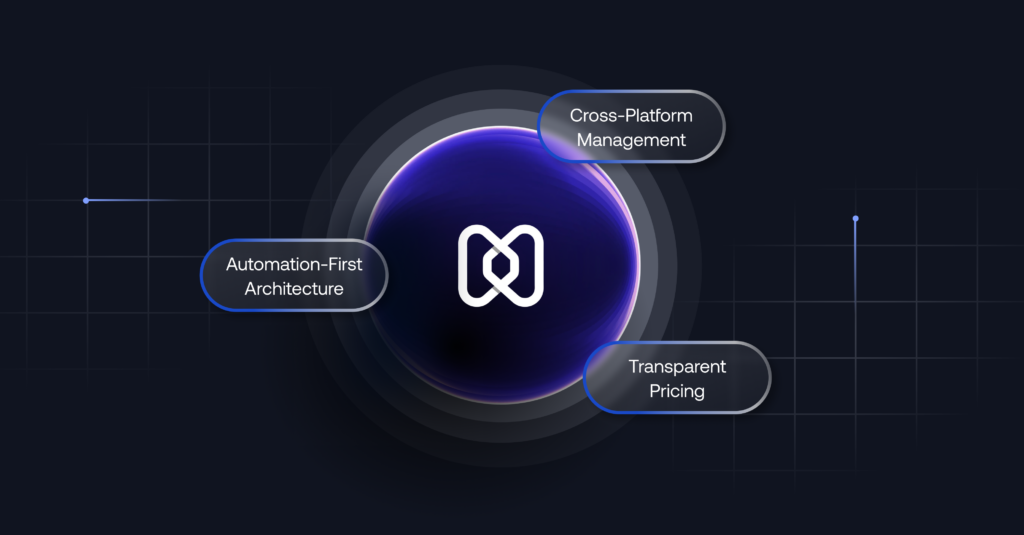
Operational efficiency defines the long-term success of any endpoint management strategy. Many competitors rely heavily on layered configurations and manual adjustments, increasing the administrative burden.
Hexnode supports dynamic device groups based on available device, user and compliance criteria, along with documented automation and scheduling options for supported endpoint actions. These automation capabilities reduce repetitive tasks and minimize human error.
Automation can reduce repetitive administrative work in large endpoint environments, although its effect on total cost of ownership depends on the organization’s deployment and operating model. IT administrators spend less time on routine configuration and more time on strategic initiatives.
When organizations evaluate the best UEM comparison, automation maturity often determines long-term scalability. Hexnode’s automation and centralized management capabilities can help IT teams manage growing endpoint environments more efficiently.
Administrative Experience Without Compromise
Enterprise IT teams need visibility without clutter. Overly complex dashboards slow decision-making and increase training requirements.
Hexnode delivers a centralized console that provides clear device segmentation, streamlined navigation, and role-based access control. Administrators can delegate responsibilities securely without exposing unnecessary permissions.
This design approach improves productivity and strengthens governance. Administrators can configure technician roles and scopes so delegated technicians manage specified devices, groups, users or domains while authorized administrators retain broader portal access.
In contrast to platforms that require extensive configuration knowledge to navigate effectively, Hexnode balances depth with usability. That balance accelerates adoption and shortens training cycles.
Transparent Pricing and Cost Efficiency
Cost remains a decisive factor in any enterprise UEM comparison. Licensing complexity often obscures the true cost of endpoint management solutions.
Hexnode offers multiple subscription plans with documented feature differences, allowing organizations to select an edition based on their management requirements. Enterprises can compare Hexnode’s documented subscription editions and select a plan whose included capabilities align with their operational requirements.
For organizations seeking affordable UEM solutions, this clarity matters. Cost-effective does not mean feature-limited. Hexnode delivers enterprise-grade capabilities while maintaining pricing flexibility suitable for both large enterprises and scaling organizations.
Automated enrollment, centralized administration and supported automation workflows can reduce some repetitive deployment and management tasks, although realized savings vary by implementation.
Use Cases Where Hexnode Excels
While many UEM platforms perform adequately in homogeneous environments, complexity increases in multi-OS, multi-location deployments.
Hexnode performs particularly well in scenarios such as:
Large and distributed workforce management
Rugged device deployments for frontline operations
BYOD environments that require supported work-data controls, compliance monitoring and policy enforcement appropriate to the selected enrollment method
Enterprises transitioning away from ecosystem lock-in
Its kiosk management capabilities stand out in industries such as retail, logistics, healthcare, and manufacturing. Organizations can lock devices into single app or multi-app kiosk modes while maintaining remote oversight.
For enterprises seeking affordable UEM solutions that still deliver advanced kiosk and rugged device management, Hexnode offers a strong balance between cost and functionality.
Why Enterprises Choose Hexnode
Enterprises choose Hexnode because it aligns with operational realities. It provides deep control without unnecessary complexity, supports multi-OS environments without forcing ecosystem dependency, and strengthens compliance while enabling automation.
IT leaders prioritize solutions that reduce friction and increase visibility. Hexnode delivers both.
In a crowded marketplace, differentiation depends on execution. Hexnode executes consistently across deployment, policy enforcement, automation, and cost management. That consistency builds long-term trust with enterprise technology teams.
Featured Resource
Why Hexnode UEM
Refer to the brochure to know more about UEM features and why Hexnode UEM implementation may be the best thing to do right now!
What makes Hexnode stand out in a best UEM comparison?
Hexnode supports multi-platform endpoint management, dynamic groups, automation workflows, tiered subscription plans, and configurable endpoint-compliance rules and enforcement actions.
Is Hexnode suitable for large enterprises?
Yes. Hexnode provides a cloud-based centralized management architecture, supported automated enrollment methods, and configurable technician roles and scopes for enterprise endpoint environments.
How does Hexnode compare in an Enterprise UEM comparison against ecosystem-focused vendors?
Hexnode supports centralized management across multiple endpoint operating systems, with available features varying by platform. It enables enterprises to manage diverse operating systems without restructuring their infrastructure around a single vendor.
Does Hexnode support advanced security and compliance requirements?
Yes. Hexnode provides compliance monitoring, configurable enforcement actions, reporting, and supported remote-management capabilities, subject to platform, enrollment, connectivity and edition requirements.
Conclusion
Endpoint management now plays a central role in enterprise security and productivity strategies. Selecting the right platform requires more than a checklist. It requires understanding how architecture, automation, pricing, and cross-platform control interact in real-world deployments.
In any serious enterprise UEM comparison, Hexnode performs strongly across critical dimensions, delivering advanced capabilities while remaining accessible to organizations that need cost-efficient endpoint management without compromising depth or control.
For decision-makers evaluating the best UEM comparison or asking who offers the best UEM, Hexnode stands out as a balanced and scalable platform. Its multi-platform management, automation capabilities and tiered subscription plans can help enterprises administer supported endpoints, monitor compliance and scale endpoint-management workflows.
Experience Enterprise UEM Without the Hassle
Experience full-featured unified endpoint management with zero commitment. Deploy, manage, and secure every device today.
Content writer at Hexnode. Fueled by good coffee and the occasional cat cuddle, I enjoy crafting content that informs, connects, and resonates. Nothing excites me more than knowing my words have been read, appreciated, and maybe even bookmarked.