Why the ChromeOS vs Android Kiosk Decision Matters for Enterprise Deployments
Choosing ChromeOS kiosk vs Android kiosk affects hardware cost, app compatibility, lockdown depth, and long-term manageability.
A kiosk platform mismatch often appears only after procurement. A retailer may discover that its application requires native Android support. Another deployment may uncover incompatible peripherals, offline limitations, or unexpected licensing requirements.
These gaps can force hardware replacement, increase downtime, and leave poorly configured kiosks exposed to tampering. Meanwhile, kiosk adoption continues to expand.
Therefore, IT teams should compare ChromeOS kiosk mode and Android kiosk mode before selecting hardware. The decision should account for application architecture, peripheral support, connectivity, management requirements, and licensing.
What Are ChromeOS Kiosk Mode and Android Kiosk Mode?
Modern ChromeOS kiosk deployments support locked-down websites and PWAs. Google also supports IWAs for eligible partners with access to developing IWA features. Legacy Chrome Apps are being phased out under Google’s deprecation schedule.
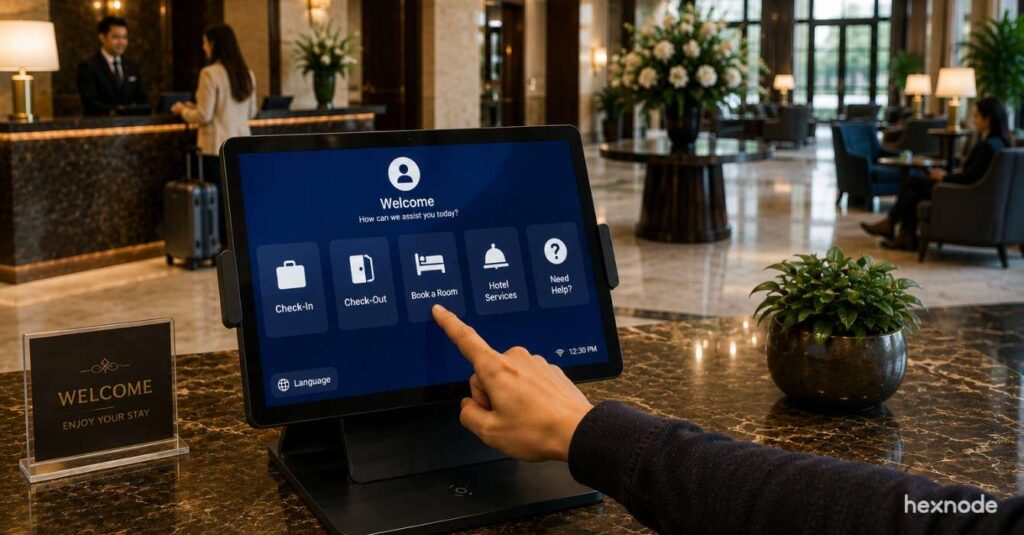
Android kiosk deployments can restrict a dedicated device to one app or an approved set of apps. Android Enterprise treats dedicated devices as fully managed endpoints for specific work purposes.
Term
Definition
Kiosk mode
A restricted device state that exposes only the applications and functions required for a defined purpose.
Single-app kiosk
A configuration that locks users into one approved application.
Multi-app kiosk
A configuration that gives users access to a controlled set of approved applications.
Device owner
An Android management role that gives the device policy controller management authority across a fully managed device.
Managed guest session
A managed ChromeOS session that lets users share a device without signing into an individual account.
The architectural distinction matters. ChromeOS kiosk mode centers on kiosk sessions, browser-based workflows, web applications, and cloud-delivered device policies.
In contrast, Android Enterprise dedicated devices use Android’s device-level management framework. Administrators can restrict the status bar, lock screen, keyboard, applications, and other system functions. As a result, Android provides a more app-centric model with granular operating-system controls.
Which Criteria Should You Use to Compare Kiosk Platforms?
When comparing ChromeOS kiosk vs Android kiosk, enterprises should evaluate app model, cost, lockdown depth, peripherals, offline behavior, and management at scale.
App model: Determine whether the workload depends on browser-based software, PWAs, Android apps, or purpose-built native applications.
Ask: Does the kiosk app exist as a web app, native app, or both?
Hardware and licensing cost: Compare device pricing alongside required management licenses, accessories, mounting hardware, and lifecycle costs.
Ask: What does each kiosk cost across its expected deployment life?
Lockdown depth: Assess how precisely IT can restrict applications, settings, navigation, hardware functions, and user actions. This aligns with the least-functionality principle in NIST SP 800-53 CM-7, which calls for limiting systems to mission-essential capabilities.
Ask: Which system functions must users never access?
Peripheral support: Validate printers, scanners, payment terminals, card readers, cameras, and other required accessories before procurement.
Ask: Does every required peripheral have compatible hardware, drivers, and application support?
Offline behavior: Determine how applications, authentication, cached data, and transactions behave when connectivity fails.
Ask: Can the kiosk complete essential tasks without continuous internet access?
Management at scale: Compare enrollment, policy deployment, updates, inventory, troubleshooting, and remote administration across the fleet.
Ask: Can IT manage the required kiosk deployment models consistently across locations?
Featured resource
The Ultimate Guide to Kiosk Management: Everything your business needs to know
Build a practical kiosk management strategy covering deployment, centralized management, operational challenges, and long-term kiosk planning.
Neither platform is universally better. ChromeOS fits web-centric kiosk workloads, while Android suits deployments that depend on native Android apps, Android form factors, or granular dedicated-device controls.
The biggest differences emerge in application support, hardware choice, licensing, lockdown controls, and enrollment. Google documents ChromeOS kiosks as kiosk sessions, while Android Enterprise uses dedicated-device management and lock task mode.
Core Platform Differences
Criterion
ChromeOS Kiosk
Android Kiosk
App model
Best suited to websites and PWAs. IWAs are also available to organizations with access to Google’s developing IWA capabilities.
Supports native Android apps, web apps, and managed applications distributed through enterprise management.
Hardware and licensing cost
Runs on eligible ChromeOS devices such as Chromebooks and Chromeboxes. Managed standalone devices require an eligible ChromeOS upgrade, including Kiosk & Signage Upgrade, Enterprise Upgrade, or Education Upgrade where applicable.
Runs across Android smartphones, tablets, rugged devices, and other supported form factors. Android Enterprise provides the management framework, while management costs depend on the EMM and hardware selected.
Lockdown depth
Device policies can restrict sign-in, applications, settings, updates, and kiosk behavior.
Dedicated-device policies can restrict application access, the status bar, keyguard, system UI, and supported hardware functions.
Kiosk modes
Kiosk Mode provides a single managed kiosk experience. Managed guest sessions support shared-device workflows separately.
Lock task mode can restrict a dedicated device to one app or an allowlisted set of apps.
Operational Deployment Differences
Criterion
ChromeOS Kiosk
Android Kiosk
Peripheral support
Compatibility depends on the ChromeOS hardware, kiosk application, web capabilities, and required peripheral. Validate printers, scanners, payment devices, and other accessories before procurement.
Compatibility depends on the Android hardware, OEM, application, peripheral interfaces, and available device support. Validate required accessories against the intended device model.
Offline behavior
Offline functionality depends on the web app or PWA. Supported applications can use technologies such as service workers, caching, and local storage to maintain selected functions without connectivity.
Offline functionality depends on how the native or managed application stores data, processes transactions, and synchronizes after connectivity returns.
Management at scale
IT enrolls devices into an organization and applies ChromeOS device policies centrally. Managed guest sessions use a separate shared-session model.
Dedicated devices support provisioning methods such as QR codes, DPC identifiers, and zero-touch enrollment through a compatible EMM.
Which Kiosk Platform Should You Choose?
Choose ChromeOS when your kiosk experience primarily runs on the web. Choose Android when the workload depends on native Android apps, specific Android hardware, or dedicated-device controls.
Best ChromeOS Kiosk Software in 2026: Top Picks & Setup Tips
Explore how ChromeOS kiosk management differ across native management, signage platforms, and UEM solutions.
Which Kiosk Platform Fits Which Use Case?
Platform choice becomes clearer when mapped to the workload. The following scenarios show where each option fits best.
Retail POS: (ChromeOS or Android)
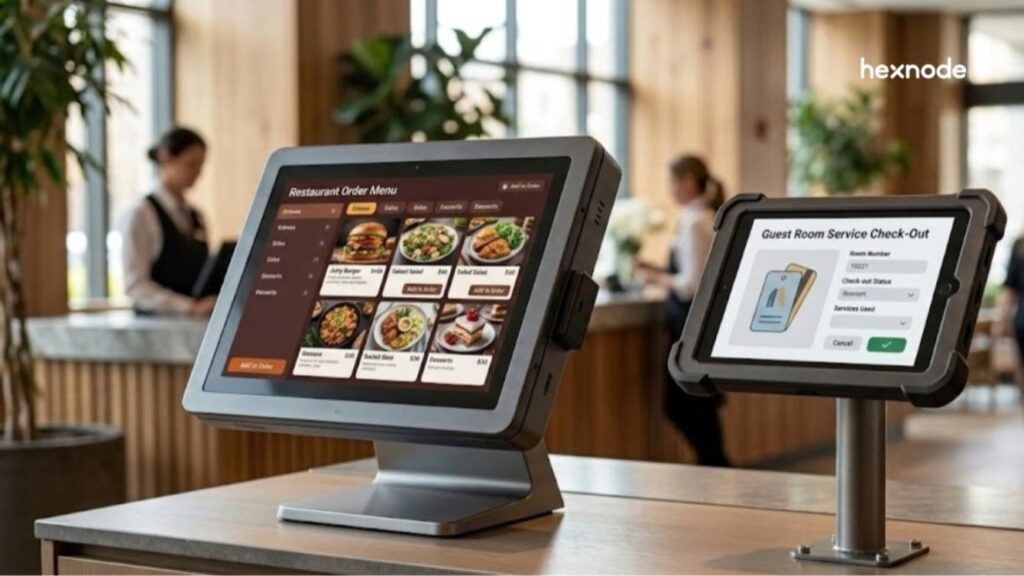
ChromeOS suits web-based point-of-sale kiosks, while Android fits POS deployments that depend on native Android apps or dedicated-device controls. Google also cites dedicated devices for customer-facing kiosk deployments.
ChromeOS supports purpose-built digital signs, while Android lists digital signage as a dedicated-device use case. Therefore, app architecture and hardware should decide the platform.
Healthcare patient intake: (ChromeOS for browser workflows; Android for app-centric tablets)
ChromeOS managed guest sessions support shared devices without individual sign-in. Android provides dedicated-device controls for restricted tablets.
Education and testing stations: (ChromeOS)
Google supports Chromebooks for managed student assessments, including single-app kiosk exam deployments. Because Chrome Apps are being phased out, new deployments should favor currently supported web-based kiosk technologies where the assessment provider supports them.
Field and frontline handhelds: (Android)
Android Enterprise supports dedicated devices for employee-facing factory and industrial environments, including smartphones and ruggedized tablets.
In practice, enterprises often choose the platform per workload rather than standardizing every kiosk on one operating system. As kiosk adoption expands, that decision becomes increasingly important.
How Hexnode UEM Manages Both ChromeOS and Android Kiosks from One Console
Hexnode UEM manages ChromeOS and Android kiosks through one console while retaining platform-specific kiosk controls.
IT teams can apply the appropriate kiosk policies across both platforms without maintaining separate device-management workflows.
ChromeOS kiosk management with Hexnode UEM
For ChromeOS, administrators configure:
Kiosk Lockdown > ChromeOS Kiosk Lockdown > Single App
The Single App Kiosk policy supports kiosk-compatible Chrome Web Store apps and web apps from Hexnode’s app inventory. Administrators can also configure kiosk app auto-launch behavior.
Hexnode UEM also supports Managed Guest Session policies for shared ChromeOS devices. These sessions provide managed access without requiring users to sign into individual Google accounts.
Additionally, Hexnode UEM integrates with Google Workspace. IT can sync ChromeOS devices and organizational units from Google Admin Console for management through the Hexnode UEM console.
Android kiosk management with Hexnode UEM
For Android Enterprise, administrators use:
Kiosk Lockdown > Android Kiosk Lockdown
The device must use device-owner enrollment for this workflow. Hexnode supports:
Single App
Multi App
Website Kiosk Settings
Control kiosk exit behavior
Android Kiosk Exit Settings support a policy-level kiosk exit passcode.
Administrators configure the global exit passcode separately under:
Admin > General Settings > Global Exit Settings (Android)
If a policy-level kiosk exit password exists, the global exit passcode cannot exit that kiosk session.
Enable Allow manually exiting kiosk mode and Reboot and tap to exit from kiosk mode to configure a relaunch delay.
The delay creates a limited window for exiting kiosk mode after reboot.
Standalone ChromeOS kiosk devices require an eligible ChromeOS management upgrade, such as Kiosk & Signage Upgrade or ChromeOS Enterprise Upgrade. Devices that already include a bundled eligible upgrade do not require a separate standalone upgrade.
What should IT test before buying kiosk hardware?
IT should validate application compatibility, peripherals, licensing, offline behavior, lockdown requirements, and management workflows before procurement. Testing these factors early reduces the risk of discovering platform limitations after deployment.
When is Android the better choice for frontline kiosk deployments?
Android is a suitable choice when workflows depend on native Android apps, tablets, rugged handhelds, or granular dedicated-device restrictions. Android Enterprise dedicated devices also support purpose-specific deployments across customer-facing and industrial environments.
Choose the Right Kiosk Platform with Confidence
Platform selection should follow the workload rather than an organization-wide preference.
Validate the application, peripherals, offline behavior, licensing, and management model before procurement. If different workloads favor different platforms, unified management can reduce the need for separate kiosk-management workflows.
Hexnode UEM can centralize kiosk policy deployment and device management across ChromeOS and Android while retaining platform-specific controls.
Test Kiosk Management on Your Own Devices
Evaluate Hexnode UEM with your ChromeOS and Android environment before committing to a broader kiosk rollout.
I write at the intersection of technology, process, and people, focusing on explaining complex products with clarity. I break down tools, systems, and workflows without any noise, jargon, or the hype.