Shai-Hulud worm copycats 2026 highlight how npm supply-chain malware can move from poisoned packages into developer endpoints, CI/CD workflows, and publishing pipelines. Earlier Shai-Hulud activity compromised more than 500 npm packages and targeted GitHub tokens, cloud API keys, and other developer credentials. In May 2026, researchers reported TeamPCP-linked activity affecting more than 170 npm packages and two PyPI packages, followed by copycat npm packages such as chalk-tempalte. These attacks abuse trusted install workflows, lifecycle scripts, stolen credentials, GitHub dead-drop repositories, and package publishing access to spread. Organizations should remove malicious packages, inspect lockfiles, isolate affected developer machines and CI/CD runners, remove persistence artifacts, rotate exposed credentials, harden npm install behavior, and avoid relying on provenance alone. Here, Hexnode helps strengthen the endpoint side of the response through device management, scripting, compliance, patching, identity-aware access, and threat response controls.
The npm ecosystem has seen repeated Shai-Hulud-style supply-chain attacks targeting developer environments, CI/CD workflows, and package publishing paths. These campaigns compromised hundreds of packages and used stolen credentials to spread through the npm registry. In September 2025, CISA warned that the self-replicating Shai-Hulud worm had compromised more than 500 packages and targeted GitHub tokens, cloud API keys, and other developer credentials.
In May 2026, the threat evolved again. TeamPCP-linked Mini Shai-Hulud activity affected more than 170 npm packages and two PyPI packages. The payloads aimed to steal credentials, exfiltrate data, and propagate through package publishing workflows. Around the same period, researchers reported that TeamPCP appeared to publish Shai-Hulud source code to GitHub with deployment-style instructions. Researchers later reported copycat npm activity, including a Shai-Hulud clone in the typo-squatted package chalk-tempalte.
For security teams, the key takeaway is clear. Developer endpoints should be treated as high-risk execution environments, not just productivity machines. When a poisoned package runs inside a trusted terminal, IDE, or CI workflow, it may gain access to the same tokens, secrets, and repositories as the developer using that device.
What Shai-Hulud Worm Copycats 2026 Mean for npm Developers
Shai-Hulud copycats became a concern after researchers reported that leaked Shai-Hulud code had been reused in npm malware. One documented package, chalk-tempalte, contained a direct Shai-Hulud clone. It was published alongside other malicious packages from the same npm account, including @deadcode09284814/axios-util, axois-utils, and color-style-utils.
The risk is not limited to one typo-squatted package. The broader Shai-Hulud pattern targets the trust developers place in package installs, release automation, and stored credentials. In the May campaign, npm packages used malicious preinstall loaders and obfuscated JavaScript payloads to run inside developer and CI/CD environments. The payloads were designed to steal credentials, exfiltrate them through multiple channels, and use stolen access to publish additional compromised packages.
This makes developer workstations and build runners key exposure points. The attack does not depend on a phishing link or an obvious executable. It can begin when a developer installs or updates a dependency that contains malicious install-time behavior.
Here’s a quick breakdown of the threat, how it reaches developer systems, and why teams should treat it as urgent.
Area
Factual summary
Threat
Shai-Hulud-style npm supply-chain malware and copycat packages
Attack method
Poisoned or typo-squatted npm packages
Execution point
Dependency installation, package lifecycle scripts, or CI/CD workflows
The attack chain starts with a package install, but the real exposure comes from what that package can execute inside the developer environment.
Developer installs a poisoned npm package
↓
npm lifecycle behavior runs package scripts
↓
Malicious payload executes in the local or CI environment
↓
Secrets, tokens, and configuration files are collected
↓
Data is exfiltrated through attacker-controlled channels or written to public GitHub dead-drop repositories
↓
Stolen access may be used to publish more compromised packages
This behavior is possible because npm packages can define lifecycle scripts that run during install-related phases. The npm documentation confirms that scripts can run during install stages and that script files do not have to be JavaScript; they only need to be executable.
In Shai-Hulud-style campaigns, that capability becomes dangerous when attackers compromise a package, maintainer account, or release workflow. A trusted install process can become a credential-harvesting path. Some reported campaigns also created public GitHub repositories as dead drops for stolen data.
Ensure Software Supply Chain Security with Hexnode UEM
Learn more about using Hexnode UEM to strengthen software supply chain security with runtime visibility, script-based audits, and integrity checks.
Why Should Organizations Act Quickly?
Developer credentials are high-value assets. A single exposed token can affect source code, CI/CD workflows, cloud accounts, package registries, and downstream users. That is why Shai-Hulud-style attacks are more than ordinary malware infections. They turn developer identity and publishing access into a propagation channel.
The risk is also operational. In May 2026, researchers reported continued Shai-Hulud-related activity across npm and PyPI. They also warned that valid provenance or build attestation does not guarantee that a package is clean. If attacker-controlled code runs inside a trusted workflow before publishing, the resulting package can still carry a valid attestation.
For organizations, the priority is containment. Affected developer machines and CI/CD runners should be isolated before tokens are revoked or rotated. Persistence should be removed first to prevent active malware from reacting to credential changes. Teams should then remove malicious packages, inspect lockfiles, rebuild affected CI/CD runners from clean images, invalidate caches, and rotate GitHub tokens, npm tokens, cloud credentials, SSH keys, and other secrets that may have been present on affected systems.
Current Remediation
Use these steps to contain affected developer environments, remove malicious dependencies, and reduce the chance of reinfection.
Remove malicious packages from project files and lockfiles. Check for chalk-tempalte, @deadcode09284814/axios-util, axois-utils, and color-style-utils.
Check related artifacts, including GitHub repositories containing “A Mini Sha1-Hulud has Appeared” and suspicious IDE or coding-agent configuration files.
Rotate exposed credentials from affected developer machines and CI/CD environments. Include GitHub tokens, npm tokens, cloud keys, SSH keys, and other secrets.
Block reported C2/domain indicators tied to the malicious packages where possible. OX reported that chalk-tempalte used its own C2 server.
Harden npm installs with –ignore-scripts or ignore-scripts=true where possible. Test first, since some legitimate packages rely on lifecycle scripts.
Use OIDC-based trusted publishing where supported, instead of storing long-lived npm write tokens in CI/CD workflows.
Do not rely on provenance alone. Provenance shows where and how a package was built, but it does not prove the package is malware-free.
How Hexnode Helps Reduce Developer Supply-Chain Exposure
Shai-Hulud-style attacks target the systems developers trust every day. Once a poisoned package executes, the developer endpoint can become a path to source code, CI/CD pipelines, cloud credentials, and publishing workflows. Hexnode helps reduce that exposure by combining endpoint management, identity-aware access, scripting, patching, and threat response into a centralized platform.
Unified Endpoint Management
Hexnode UEM helps IT teams standardize and secure developer devices across Windows, macOS, Linux, Android, and other platforms. Teams can enforce approved applications, manage browser and endpoint policies, track device posture, and reduce unmanaged toolchain drift across developer fleets.
Advanced Scripting and Response Automation
Hexnode supports PowerShell, Bash, and Python scripting across managed endpoints. Security teams can use scripts to check npm configuration, search for malicious package names, inspect lockfiles, or collect endpoint posture data during an active supply-chain incident.
Threat Detection and Response
Hexnode XDR adds a detection and response layer with unified visibility, threat hunting, contextual alerts, and response actions from a single console. Security teams can investigate suspicious activity, isolate affected devices, kill malicious processes, and quarantine files during containment workflows.
Identity and Conditional Access
Hexnode IdP connects identity decisions with device compliance. Instead of relying only on credentials, organizations can shape access policies around whether the device itself is managed and compliant.
Patch Management and Compliance
Hexnode also helps teams maintain endpoint hygiene during recovery. Patch management, compliance reporting, and device visibility help identify unmanaged or non-compliant developer systems while security teams rotate credentials, rebuild environments, and investigate compromise indicators.
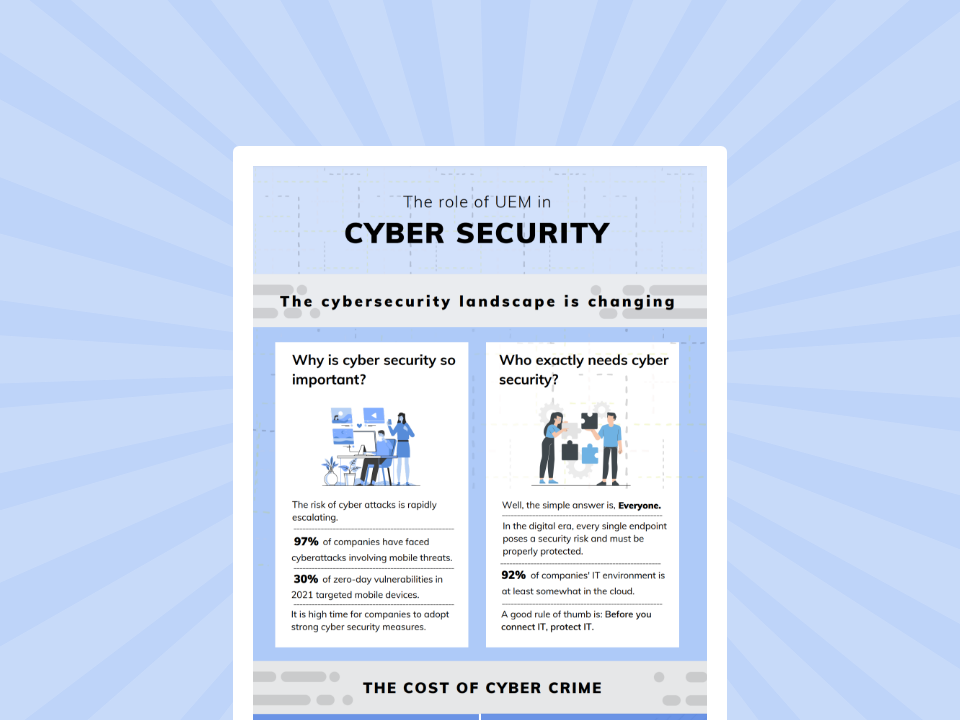
Infographic
The role of UEM in cyber security
Learn how Unified Endpoint Management helps companies enhance cyber security.
From Poisoned Packages to Managed Developer Resilience
Shai-Hulud worm copycats 2026 shows how quickly supply-chain malware can move from one poisoned package to a wider developer ecosystem problem. The weak point is not just the package registry. It is the combination of trusted installs, stored credentials, powerful developer tools, and unmanaged endpoint behavior.
Organizations should respond by removing malicious packages, isolating affected machines, rotating exposed credentials, hardening npm install behavior, and tightening CI/CD publishing controls. Hexnode UEM strengthens the endpoint side of that response. It helps teams manage developer devices, enforce approved applications, run response scripts, track compliance, and maintain patch posture. That does not eliminate npm supply-chain risk, but it gives security teams a stronger control layer around the systems where these attacks often begin.
Secure Your Developer Fleet Against Supply Chain Threats
Take control of developer endpoints with centralized scripting, app control, patching, compliance, and threat response.
Curious, constantly learning, and turning complex tech concepts into meaningful narratives through thoughtful storytelling. Here I write about endpoint security that are grounded in real IT use cases.