Rokarolla Android malware is a new Android banking trojan that targets 217 banking and cryptocurrency apps through phishing overlays and extensive device-control capabilities. Distributed via fake Chrome and TikTok downloads, it abuses Accessibility Services to steal credentials, intercept SMS messages, capture screen activity, and remotely control infected devices. For organizations, the threat poses serious BYOD security risks by exposing MFA codes, corporate apps, and business communications. Hexnode UEM and Hexnode XDR can help reduce risk through device compliance enforcement, application controls, and threat detection.
Android banking malware continues to evolve beyond simple credential theft. The latest example is Rokarolla Android malware, a newly discovered banking trojan that combines phishing overlays, keylogging, accessibility abuse, and remote device control capabilities. Security researchers have identified Rokarolla targeting 217 banking and cryptocurrency applications, giving attackers the ability to steal sensitive information and manipulate infected devices remotely.
Unlike traditional banking trojans that focus solely on financial fraud, Rokarolla turns infected Android devices into highly controlled attack platforms. By abusing Android Accessibility Services and acquiring extensive permissions, the malware can capture credentials, intercept communications, bypass security prompts, and maintain control even when the device is locked.
Researchers report that Rokarolla primarily spreads through malicious websites masquerading as trusted download sources for popular applications such as Google Chrome and TikTok.
Victims who visit these websites are prompted to download what appears to be a legitimate application. However, the downloaded package acts as a malware dropper. During installation, the malware imitates Google Play Protect, creating a false sense of security while guiding users through a fake application installation process.
Once installed, Rokarolla requests several high-risk permissions, including:
Accessibility Services access
SMS permissions
Notification access
Call management permissions
These permissions provide attackers with extensive visibility into user activity and device operations.
Before launching its primary attack routines, the malware profiles the infected device by collecting information such as:
Device Information Collected
Purpose
Device model
Victim profiling
Android version
Compatibility checks
Locale settings
Regional targeting
Screen characteristics
Overlay customization
Battery status
Operational monitoring
Storage information
Resource assessment
RAM details
Performance optimization
This profiling helps attackers tailor malicious actions to individual devices.
Why Rokarolla Is a Serious BYOD Security Threat
The rise of hybrid work has increased organizational dependence on smartphones and tablets. Many employees access business applications, corporate email, collaboration platforms, and identity systems from personal devices.
When a device infected with Rokarolla accesses enterprise resources, attackers may gain indirect access to business data and workflows. Even if the malware primarily targets financial applications, its broader surveillance capabilities create additional enterprise risks.
Potential consequences include:
Interception of multifactor authentication codes
Theft of corporate email sessions
Exposure of sensitive business communications
Credential harvesting from SaaS applications
Monitoring of employee activity
Unauthorized access to business accounts
Accessibility abuse is particularly concerning because it allows attackers to interact with user interfaces in ways that appear legitimate. Malware can potentially approve prompts, interact with applications, and bypass assumptions about user intent.
For organizations supporting BYOD environments, mobile malware infections can quickly become identity and access management incidents.
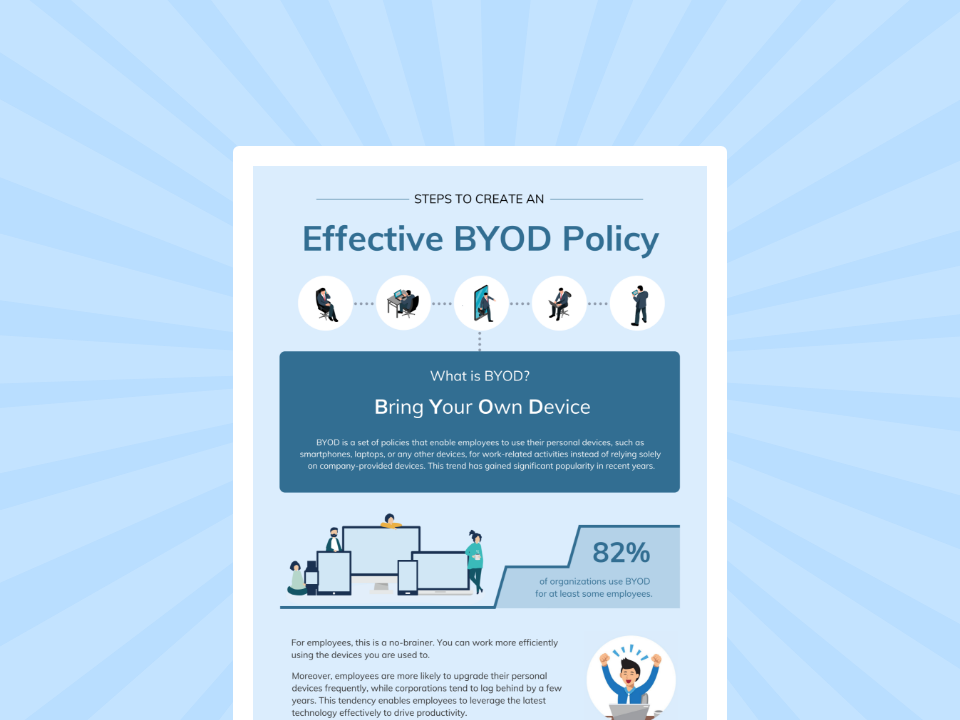
Featured Resource
Steps to create an effective BYOD policy
Learn the key steps to build a secure, effective BYOD policy for your organization.
How Hexnode Helps Defend Against Android Banking Malware
Organizations need proactive controls to reduce the risk posed by sophisticated Android threats such as Rokarolla.
Enforce Secure Android Device Compliance with Hexnode UEM
Hexnode UEM lets administrators define Android compliance policies, and when integrated with an IdP such as Microsoft Entra ID or Okta, device compliance status can support conditional access decisions.
Administrators can:
Restrict installation of unauthorized applications
Enforce managed application deployment
Monitor device compliance status
Identify devices running risky configurations
Apply Android security policies across corporate and BYOD devices
By reducing opportunities for users to install untrusted applications, organizations can significantly lower the likelihood of malware infections originating from unofficial download sources.
Hexnode UEM enables administrators to define device compliance controls and share compliance status with supported IdP Conditional Access workflows.
Accelerate Threat Detection with Hexnode XDR
While preventive controls remain essential, organizations also need visibility into suspicious activity that may indicate compromise.
Hexnode XDR unifies endpoint telemetry, automated alert correlation, and remediation in a single dashboard, with alerts enriched by device health information, owner profiles, and active UEM policy configurations.
Security teams can investigate:
Suspicious authentication behavior
Abnormal endpoint activity
Potential compromise patterns across environments
Correlating mobile risk signals with broader security telemetry helps organizations identify and contain threats before attackers achieve their objectives.
As mobile malware continues to gain advanced capabilities, unified visibility becomes increasingly important for incident response and threat hunting operations.
Conclusion
The discovery of Rokarolla Android malware highlights how modern mobile threats are evolving beyond traditional banking fraud. By combining phishing overlays, accessibility abuse, credential theft, keylogging, and extensive remote-control functionality, Rokarolla gives attackers near-complete control over infected Android devices.
For organizations supporting Android deployments and BYOD programs, the threat extends beyond financial loss. Compromised devices can expose identities, corporate communications, SaaS applications, and business workflows.
Defending against these threats requires a combination of device compliance enforcement, application control, risky-permission monitoring, and rapid response capabilities. Organizations that implement strong mobile security controls will be better positioned to detect and contain the next generation of Android banking trojans before they can cause significant damage.
Defend Android Devices From Malware
Secure BYOD endpoints with Hexnode UEM and XDR to detect threats and enforce compliance faster.
How do Android Accessibility Services become a security risk?
Accessibility Services are designed to help users interact with devices more effectively. However, malicious applications can abuse these permissions to observe screen activity, perform actions on behalf of users, capture input, and interact with applications without requiring direct user interaction.
Can enterprise mobile security controls reduce the impact of phishing overlays?
Yes. Organizations can reduce exposure by enforcing trusted app sources, restricting application installation, monitoring device compliance, requiring secure authentication methods, and limiting access from devices that fail security policy requirements.
Content writer at Hexnode. Fueled by good coffee and the occasional cat cuddle, I enjoy crafting content that informs, connects, and resonates. Nothing excites me more than knowing my words have been read, appreciated, and maybe even bookmarked.