The incident: This MOVEit Automation alert highlights a critical authentication bypass vulnerability (CVE-2026-4670) that allows remote attackers to gain unauthorized access without credentials or user interaction.
The vector: The vulnerability stems from an authentication flaw that allows attackers to bypass access controls and interact with the system without proper verification.
The escalation risk: Progress also addressed CVE-2026-5174, a high-severity vulnerability related to privilege escalation, which could increase the impact of unauthorized access if exploited.
The magnitude: Internet-facing MOVEit Automation deployments may be at risk if unpatched, increasing the potential exposure surface for attackers.
Urgent patching: Organizations should update to supported fixed versions such as 2025.0.9 or 2024.1.8 and monitor systems for any signs of unauthorized activity.
This MOVEit Automation alert focuses on CVE-2026-4670, a critical authentication bypass vulnerability disclosed by Progress Software in MOVEit Automation, with a CVSS score of 9.8. The issue affects an enterprise file transfer solution widely used to manage automated data exchange across systems.
The vulnerability allows unauthenticated remote attackers to bypass authentication and gain unauthorized access to MOVEit Automation environments. Attackers can exploit the vulnerability to access sensitive data flows and system-level operations, depending on how the platform is deployed and configured
MOVEit Automation is a managed file transfer (MFT) solution used to automate and manage file movements between internal systems, cloud environments, and external partners. These platforms are typically used to handle scheduled data transfers and integrate with multiple systems across an organization’s infrastructure.
1. Authentication bypass flaw
The vulnerability is caused by an improper authentication mechanism (CWE-305), which allows attackers to bypass authentication controls without valid credentials. While the exact exploitation method has not been publicly disclosed, the flaw enables the system to accept requests that are not properly authenticated, allowing unauthorized interaction with the application.
2. Potential data exposure
MOVEit Automation environments often handle sensitive operational data as part of automated workflows. If exploited, this vulnerability could allow unauthorized access to such data, depending on how the system is configured and what resources it is connected to. This may include access to files, transfer processes, or connected systems managed through the platform.
3. Authentication control impact
Because the vulnerability does not require valid credentials or user interaction, attackers may be able to access the system without going through standard authentication checks. This increases the risk associated with internet-facing deployments, where exposed services could be targeted without prior access.
Reinforcing cybersecurity with Multi-Factor Authentication (MFA)
MFA strengthens security by adding multiple user identity verification layers
Strengthening Response to the MOVEit Automation Alert
This MOVEit Automation alert highlights the need for a structured response focused on visibility, controlled access, and timely patching. Apply vendor updates to address the vulnerability. Identify, update, and monitor affected systems consistently across environments.
Pillar 1: Endpoint Visibility and Control (Hexnode UEM)
Hexnode UEM enables organizations to maintain visibility and control over systems running MOVEit Automation across distributed environments.
Inventory identification: IT teams can use device inventory capabilities to identify systems running MOVEit Automation and verify their current versions. Maintain an accurate asset inventory to quickly identify and address vulnerable instances.
Patch coordination: Administrators can coordinate update rollouts across systems using centralized management actions. Scheduling deployments during defined maintenance windows helps reduce operational disruption, especially for systems that require planned downtime.
Pillar 2: Activity Monitoring and Visibility (Hexnode XDR)
Since CVE-2026-4670 allows unauthorized access without valid credentials, visibility into system activity becomes important.
Activity monitoring:XDR allows security teams to review system and access logs to identify unusual behavior, such as unexpected access patterns or changes to automation workflows.
Event correlation: Correlating activity across endpoints can help teams identify inconsistencies or unauthorized interactions that may require further investigation.
Pillar 3: Access Control and Identity Enforcement
Limiting access to critical systems reduces exposure in case of exploitation.
Controlled access: Restrict administrative access to MOVEit Automation systems to approved users and managed devices.
Identity integration: Integrating with an identity provider (IdP) allows organizations to enforce access policies, ensuring that only authenticated and authorized users can interact with critical systems.
Policy enforcement: Use device management policies to ensure only compliant systems can access sensitive infrastructure and workflows.
Featured resource
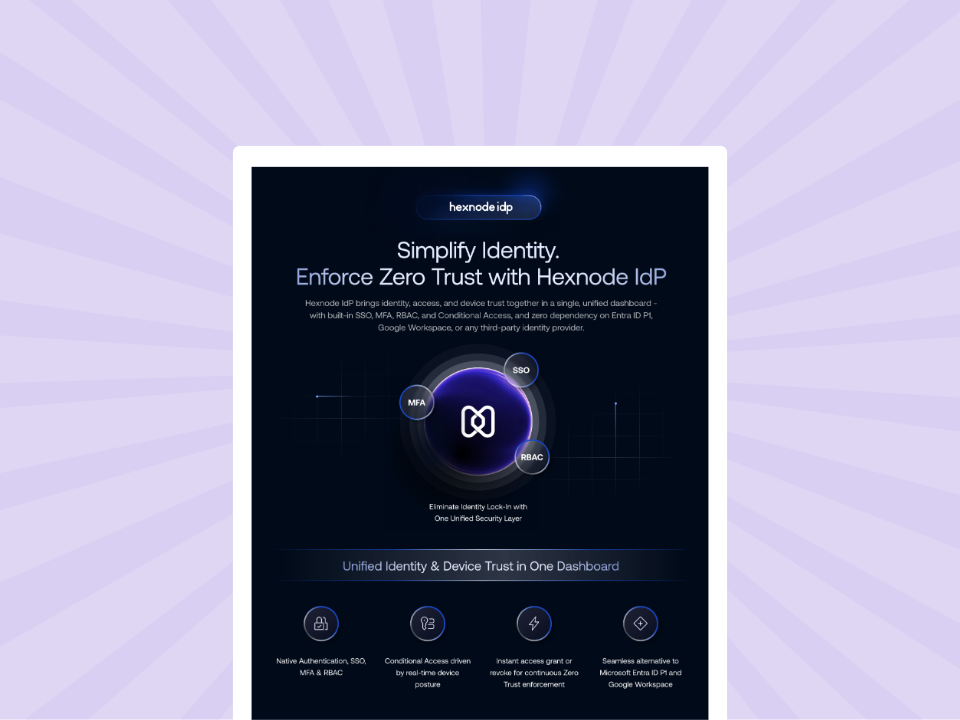
Hexnode IdP Info sheet
Unified identity, access, and device trust simplify management while enabling centralized control and continuous security enforcement
This MOVEit Automation alert underscores the importance of securing systems that handle automated data transfers. CVE-2026-4670 highlights how authentication flaws can expose critical infrastructure. These risks increase if not addressed promptly. Applying vendor patches is the immediate priority. Maintaining visibility and control over affected systems is equally important.
Organizations should focus on identifying vulnerable deployments, restricting access, and monitoring system activity to reduce potential risk. With centralized device management and policy enforcement, Hexnode UEM helps teams maintain oversight of endpoints and ensure consistent security controls across environments.
Evaluate your MOVEit Automation deployments. Update, monitor, and enforce access controls to reduce exposure.
Stay updated on critical security alerts
Start your free trial to access insights on vulnerabilities secure your endpoints.
A storyteller for practical people. Breaks down complicated topics into steps, trade-offs, and clear next actions—without the buzzword fog. Known to replace fluff with facts, sharpen the message, and keep things readable—politely.