IT Admin’s Guide to Patch Management with Hexnode
Learn more about streamlining patch management and keeping devices secure with Hexnode in this IT admin’s guide.

Get fresh insights, pro tips, and thought starters–only the best of posts for you.

In the modern enterprise, the VPN is often viewed as a fortress wall. It is a layer that separates the public internet from the corporate network. However, when a vulnerability exists within that wall itself, it can undermine a key part of the organization’s security posture. That is exactly what makes this Windows IKE Service RCE such a serious concern for enterprise IT teams.
CVE-2026-33824 is a critical remote code execution vulnerability in the Windows IKE Extension. Because it affects Internet Key Exchange functionality used to establish secure network connections, it targets a core part of Windows-based VPN and IPsec communications. For IT admins, this IPsec vulnerability 2026 presents a high-severity risk, as an unauthorized attacker may be able to execute code over the network on affected systems before authentication.
To understand the severity of this flaw, we must look at the role of the IKE service. The Internet Key Exchange (IKE) protocol is the foundation of IPsec. it is responsible for the “handshake” that sets up security associations between two entities.
The vulnerability affects the Windows IKE Extension during the handling of network traffic used to establish secure connections. Because the flaw is reachable by an unauthorized attacker over the network, exploitation may be possible before normal authentication occurs.
By sending crafted network traffic, an attacker may be able to trigger memory corruption in the affected component and achieve remote code execution on a vulnerable system. In the case of this Windows IKE Service RCE, the issue is especially serious because the affected service plays a privileged role in secure connection handling. That means the impact of successful exploitation could be severe across exposed systems.
Once an exposed VPN gateway or workstation is compromised, it could provide an attacker with a foothold inside the environment. From there, the risk extends beyond the initial device to internal systems and network resources. Because CVE-2026-33824 can be exploited by an unauthorized attacker over the network, organizations should treat exposed IKE-enabled systems as high-priority assets for remediation.
This vulnerability is a serious threat to remote access security. For years, VPNs have been treated as a trusted way to protect remote work. But when a critical flaw affects the service used to establish those secure connections, that trust is shaken. The Windows IKE Service RCE shows how a security layer can itself become part of the attack surface.
If your organization relies on Windows-native IKEv2-based remote access, exposed and unpatched systems may face elevated risk. This incident also reinforces a broader security lesson: legacy VPN models can create concentrated risk around network-facing services. That is why many organizations are moving toward Zero Trust Network Access (ZTNA), which is designed to provide more granular access without exposing the broader network.
Microsoft released a fix for CVE-2026-33824 as part of the April 2026 security updates. With a large number of vulnerabilities addressed in this month’s patch release, organizations are dealing with a remediation workload that can be difficult to manage manually.
However, “Patch and pray” is not a reliable response to a critical remote code execution flaw. In distributed environments, some devices may be offline, delayed, or fail to install updates on time. In a CVSS 9.8 scenario, even a small percentage of unpatched systems can leave meaningful exposure across the fleet.
When a high-severity vulnerability like CVE-2026-33824 affects a network-facing endpoint, the first priority is knowing which devices are exposed, which updates apply, and how quickly remediation is progressing. Hexnode UEM’s patch and update capabilities are built around that workflow, with reporting for vulnerable devices, missing updates, patch compliance, deployment status, and CVE-linked vulnerability analysis across managed endpoints.
You cannot remediate what you cannot identify. Hexnode’s Patch and Update reports give admins visibility into vulnerable devices, applicable vulnerabilities, missing updates, and patch compliance, making it easier to see which managed systems still need relevant security fixes. The platform’s reporting also includes CVE-focused and severity-based views, which helps IT teams prioritize urgent issues and verify patch coverage without relying on manual device-by-device checks.
Hexnode also helps reduce the delay between identifying a vulnerability and deploying a fix. Admins can automate patch management for Windows devices, approve updates, assign them to devices or groups, schedule installation windows, and define how update and reboot behavior should be handled on endpoints. Hexnode’s Windows Update Experience controls also allow IT teams to configure deadlines, restart behavior, user notifications, and how much end users can interact with the update process, which helps accelerate remediation in distributed environments.
For a critical issue like CVE-2026-33824, patching is not just about deployment — it is also about prioritization and verification. Hexnode’s patch metrics and audit-oriented reports help teams track missing critical updates, review vulnerabilities by severity, monitor devices with the highest outstanding exposure, and follow patching progress over time. That gives IT teams a more defensible way to focus on the systems that matter most first and reduce the number of unmanaged gaps left behind.
Patch deployment alone does not eliminate risk if some devices remain unpatched or fall out of compliance. This is where Hexnode’s compliance enforcement and conditional access capabilities become relevant. This means organizations can reduce the exposure created by unpatched devices until remediation is complete.
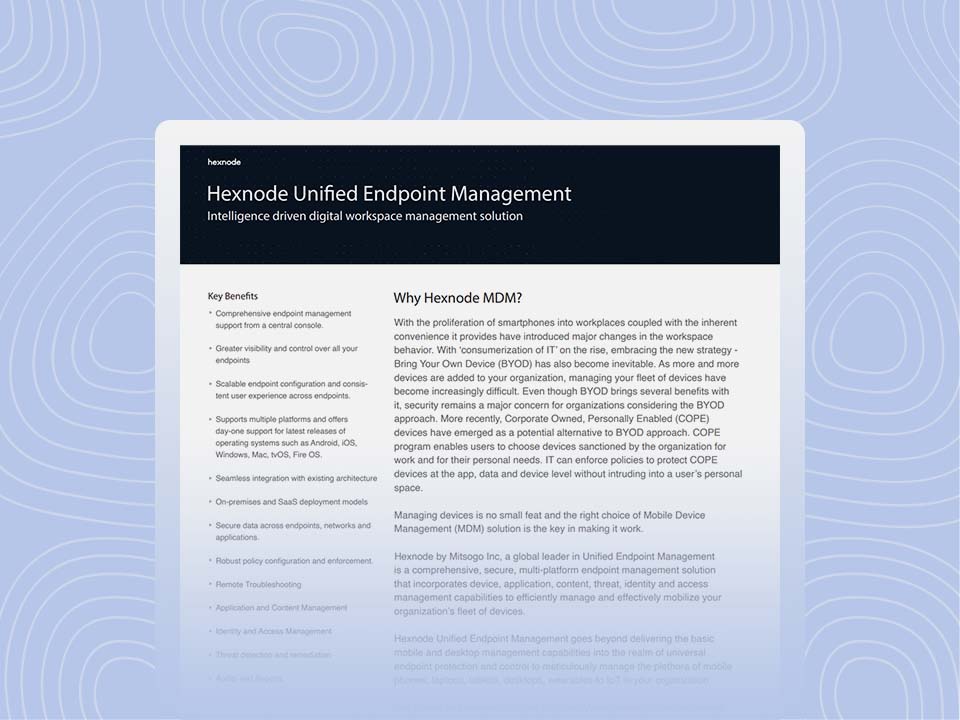
Download the datasheet and get to know about Hexnode Unified Endpoint Management capabilities.
Get the DatasheetCVE-2026-33824 is a wake-up call. When a CVSS 9.8 flaw hits the very services we use for security, the only solution is automated agility. Replacing legacy VPNs with Hexnode’s automated patching, compliance, and Zero Trust policies accelerates threat response and minimizes exposure.
Use Hexnode to track missing updates, automate patch remediation, and isolate non-compliant devices before risk spreads.
Signup Now