Windows kiosk software turns standard PCs into secure, purpose-built devices by locking access to approved apps, websites, and peripherals. This guide compares the top Windows kiosk solutions for 2025, with Hexnode UEM positioned as the strongest choice for scalable kiosk lockdown, remote troubleshooting, patching, BitLocker management, and support for both Win32 and UWP apps.
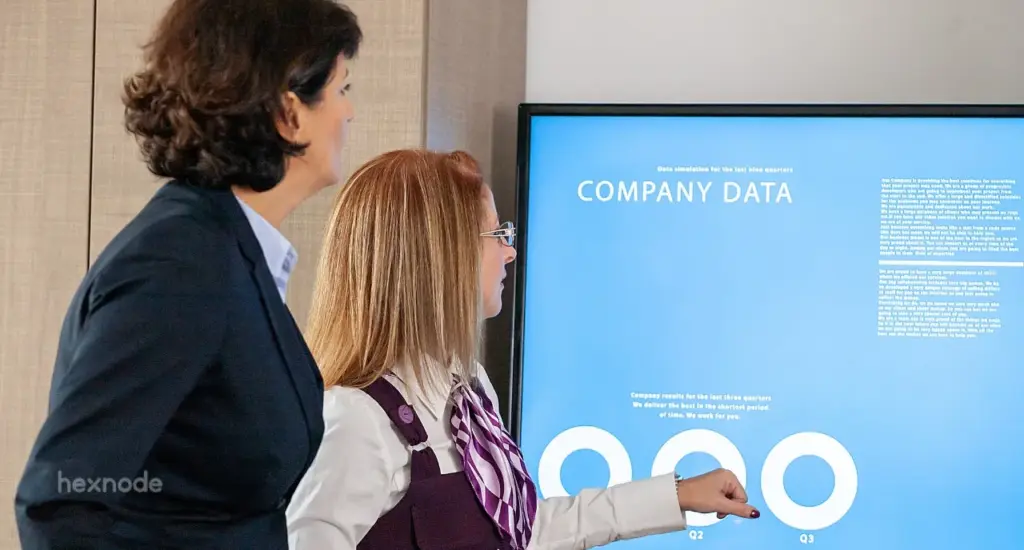
As businesses increasingly rely on digital touchpoints, the need to control how users interact with devices has never been higher. Windows kiosk software serves as the critical layer that turns a general-purpose computer into a purpose-built appliance. It restricts the device to essential functions. This ensures a focused and tamper-proof experience, whether for digital signage or self-service.
But not all lockdown tools are created equal. In a landscape where customers demand instant, secure access to information, choosing the best kiosk software for Windows is paramount. This guide evaluates the top kiosk software for Windows 10 and 11, helping you navigate the balance between rigid security and user-friendly management.
Turning a standard PC into a secure public terminal requires robust Windows kiosk software to prevent tampering and ensure focus. This guide evaluates the top 10 solutions for 2025, comparing critical features like app isolation, peripheral lockdown, and remote management. While we review industry heavyweights like Microsoft Intune and ManageEngine, Hexnode UEM emerges as the leading choice for its holistic approach to securing both legacy and modern applications at scale.
What is a Windows Kiosk?
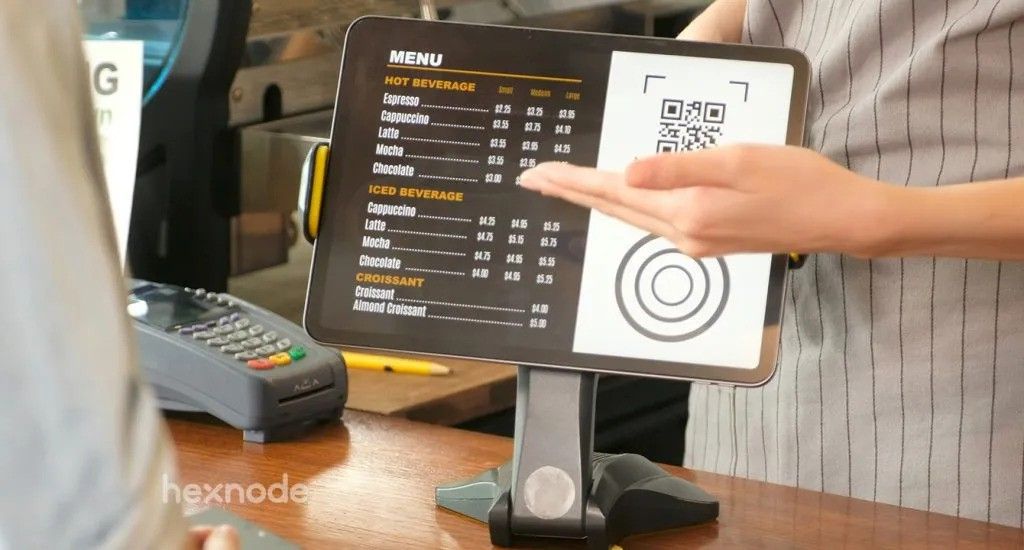
A Windows kiosk is a device running specialized software. It limits the device to run just one app or a specific list of apps.
Windows devices are ubiquitous. Microsoft has reported more than 1.4 billion monthly active Windows devices globally, making Windows a familiar platform for users and businesses alike. This familiarity makes it well-suited for self-service kiosks and digital experiences. However, standard Windows configurations are not secure enough for unrestricted public use. This includes everything from ATM-style interfaces to interactive retail displays. Windows kiosk mode software ensures the device serves its intended purpose without the risk of user tampering.
Yes, valid Windows kiosk solutions are highly secure. They use app isolation and policy restrictions to lock down the device. This prevents unauthorized access to the file system, task manager, and peripherals.
Security is the backbone of any deployment. Enterprise-grade Windows kiosk software goes beyond simple app locking. It offers:
Peripheral Lockdown: Disables USB ports to prevent data theft. Browser Restrictions: Whitelists URLs in the settings to prevent unauthorized web surfing. Automated Clearing: Wipes user data (cookies, cache) after every session. Hardware-Level Integration: Supports TPM-backed security features and, on compatible devices, Intel vPro/AMT-based remote management.
Why Hexnode is the Windows Kiosk Software Solution Leader
Hexnode UEM provides Windows kiosk management capabilities, including Single App and Multi App kiosk modes. It combines robust kiosk locking capabilities with comprehensive Unified Endpoint Management.
Hexnode UEM supports Windows kiosk lockdown, app management, remote view, patch management, BitLocker, and related Windows management policies.
Granular Control: Hexnode allows Windows devices to be restricted to a single app or a limited set of allowlisted apps, with additional multi-app kiosk settings such as Start menu layout and selected file access controls.
Tamper-Proofing: Hexnode’s Windows kiosk mode restricts users from accessing the desktop, Start menu, settings, and non-approved apps.
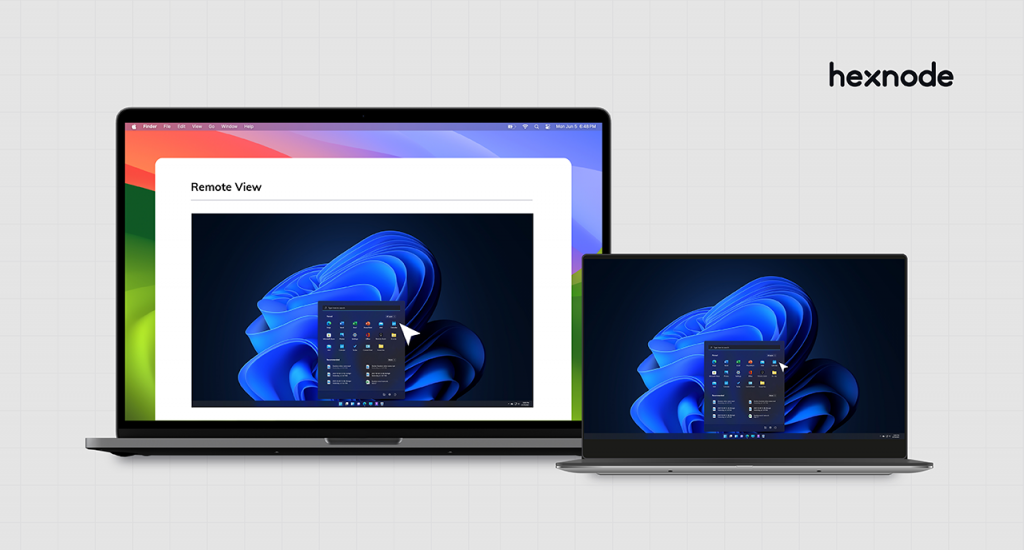
Remote Troubleshooting: View and control the screen remotely to fix issues without deploying a technician.
Win32 & UWP Support: Seamlessly run legacy .exe files or modern Store apps in a secured environment.
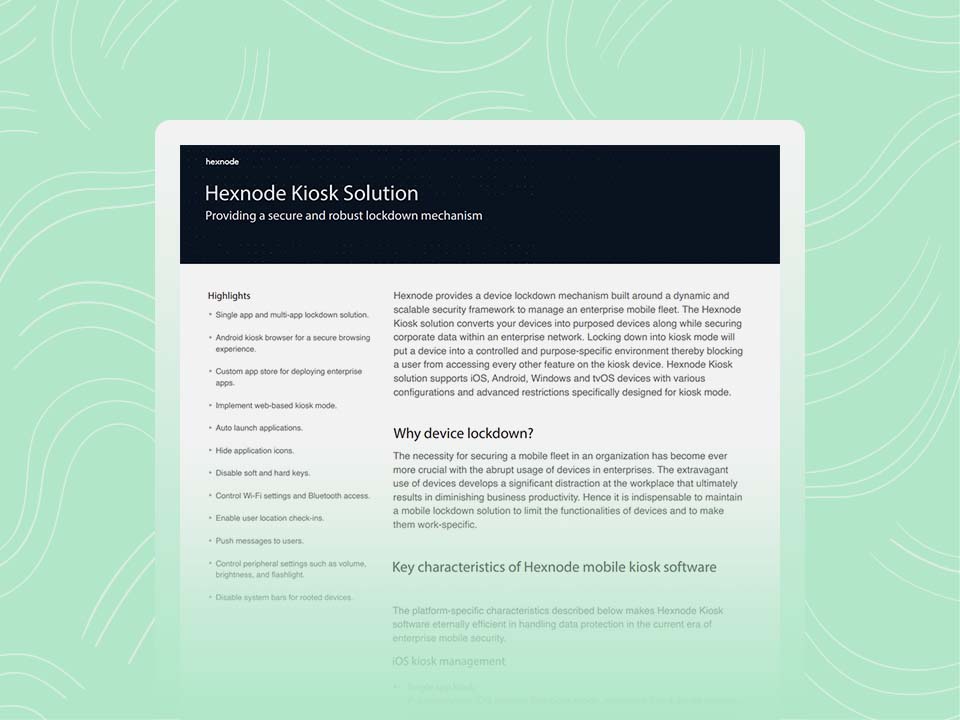
Top 10 kiosk management software
Compare the top 10 kiosk management software solutions for secure and efficient device management.
Dedicated Kiosk Software vs. UEM: Why UEM Wins
Unified Endpoint Management (UEM) offers superior scalability and centralized control compared to standalone kiosk tools. These tools are often limited to a single device type.
While dedicated Windows kiosk software has its place, UEM offers a strategic advantage:
Scalability: Push policies to thousands of kiosks at once regardless of their location.
Centralized Management: Push updates and policies to thousands of devices at once.
Cost-Effectiveness: Eliminate tool sprawl by replacing multiple tools and licenses with a single unified dashboard. Instead of buying separate software for kiosk apps, security, and remote management, UEM covers it all.
Enhanced Security: It uses the security features built into Windows. This keeps data safer than basic locking tools.
Top 10 Windows Kiosk Software
The best kiosk software for Windows combines ease of deployment, robust security features, and responsive support. This helps minimize downtime.
Below is a detailed breakdown of the top UEM and Windows kiosk software solutions available today.
Microsoft Intune
Microsoft Intune is Microsoft’s own management solution. It configures kiosk profiles for Windows Pro, Enterprise, and Education editions, supporting both local and Microsoft Entra ID accounts.
Intune is a great choice for teams already using Microsoft tools.
Key Features:
Customizable Start Menu: Tailor the layout for multi-app kiosks.
Auto Logon: Ensure the device boots directly into the user account.
Autopilot Reset: Quickly reset devices for new users.
Cloud Integration: Leverages Microsoft Entra ID for identity-driven kiosk policies.
Windows Hello for Business Support: Allows staff to log into shared kiosks using biometrics or a PIN instead of a password.
Conditional Access: Restricts kiosk access based on device health, such as requiring the OS to be fully patched.
Trial: 30-day free trial.
Hexnode UEM
Hexnode is an award-winning UEM solution. It provides advanced Single and Multi-App kiosk capabilities, prioritizing security and remote management.
Hexnode’s Windows kiosk software is designed to eliminate the learning curve. It wraps powerful security features in an intuitive interface. This makes it easy for non-technical staff to deploy kiosk software for Windows 10 in minutes.
Key Features:
GUI-Based Windows 11 Kiosk Setup: Unlike native settings that often require complex XML, Hexnode offers a drag-and-drop builder to easily set up multi-app kiosks on Windows 11.
Windows Autopilot Support: Fully integrates with Windows Autopilot for zero-touch provisioning and remote resets.
Single App Lockdown: Run a single UWP app or a desktop (.exe) application in full screen (Desktop app support available for Enterprise and Education editions).
Multi-App Lockdown: Allows a specific set of apps.
Hexnode Genie: Leverages AI to generate custom scripts (e.g., PowerShell) for advanced configurations and features a conversational chat assistant that helps IT admins resolve troubleshooting queries instantly without searching through documentation.
ManageEngine serves as an effective endpoint solution for traditional IT setups, providing automated patch management and essential device controls from a single console.
This tool is well-suited for traditional IT setups. It provides standard configuration options for Windows kiosk software.
Key Features:
App Deployment & Patching: Remotely push and update the applications permitted within the kiosk profile to ensure the latest versions are always running.
Session Management: Auto-logout features for security.
Scalefusion simplifies device management. It is easy to use, controls the browser, and stops unwanted access.
Scalefusion includes a Kiosk Browser feature that enhances the capabilities of standard Windows kiosk software.
Key Features:
Browser Management: Disable JavaScript and pop-ups.
Cross-OS Support: Supports Windows 10 and Windows 11 kiosk deployments.
Remote Troubleshooting: Fix issues remotely through a centralized console.
Content Management: Push files or media to devices for display.
AI-Generated PowerShell Scripts: Use “AirThink AI” to write custom scripts for advanced device behaviors or deep system tweaks.
Geofencing & Tracking: Receive alerts if a mobile kiosk device leaves a designated area.
Trial: 14-day free trial.
First-Hand Experience: Setting Up a Windows Kiosk with Hexnode
You need to follow a few steps to set up a kiosk. This ensures the device is not only locked down but also usable.
At Hexnode, we test our Windows kiosk software daily. Here is our expert workflow for a tamper-proof setup:
Enrollment: We utilize PPKG enrollment for bulk devices. This bypasses the OOBE, saving time during deployment.
Policy Creation: In the Hexnode portal, we select ‘Kiosk Mode‘ and choose single app/mutli-app as per the requirement.
Whitelisting: We select the necessary UWP and Win32 (desktop) apps required for the kiosk environment.
Crucial Step: We always add a background timeout policy in the settings.
Peripheral Lockdown: We disable USB file transfer but keep USB keyboard support enabled.
Automated Deployment & Patching: We schedule the policy deployment and OS patch updates to trigger during maintenance windows. The device automatically installs updates, reboots, and enters the locked state without disrupting business hours.
Troubleshooting Windows Kiosk Software Errors
Downtime impacts customer experience, making the ability to diagnose issues remotely a critical requirement.
Based on our support data, here are the most common Windows kiosk software issues and how to solve them:
Issue
Cause
Solution with Hexnode
Kiosk Screen Freezes
App memory leak or OS hang.
Use Remote View to confirm the freeze, then trigger a remote restart via the dashboard.
User Accesses Desktop
“Sticky Keys” or shortcut bypass.
Enable Advanced Kiosk Settings and block unauthorized hardware keys.
App Not Launching
Pending Windows Store update.
Use Hexnode’s Windows patch and update management capabilities to manage supported Windows updates and patches.
Wi-Fi Disconnects
Driver issues or weak signal.
Configure network policies to reconnect automatically.
The demand for self-service technology is reshaping customer behavior. A recent study reveals that 66% of consumers now prefer using self-service kiosks over interacting with staff. This shift highlights the critical need for businesses to adopt reliable kiosk software. It ensures they meet the modern expectation for speed, privacy, and autonomy.
Frequently Asked Questions (PAA)
Can I run a standard .exe file in Windows Kiosk Mode?
Yes. Native Windows can support desktop (.exe) applications in kiosk-like deployments through Shell Launcher. Assigned Access single-app kiosk mode is primarily designed for UWP apps or Microsoft Edge, while Shell Launcher replaces the Windows shell with a chosen application. In enterprise environments, organizations typically combine these features with additional lockdown policies for stronger security.
How do I exit Windows Kiosk Mode?
Exiting the kiosk environment requires administrator credentials. For security, there is no standard “exit” button for end users. Administrators can remove kiosk policies remotely through a UEM console or use approved administrative methods to exit kiosk mode.
Does Windows 11 support Kiosk Mode?
Yes, Windows 11 fully supports kiosk configurations. Windows 11 Pro and Enterprise editions support both single-app and multi-app kiosk experiences. Multi-app kiosk deployments are typically configured through Assigned Access XML policies delivered via UEM/MDM platforms, provisioning packages, or PowerShell-based management workflows.
What is the difference between Single App and Multi-App Kiosk Mode?
Single App locks the device to one application, while Multi-App creates a restricted desktop environment with access to approved apps only. In Windows kiosk software, Single App mode forces one application to run full screen. Multi-App mode allows users to switch between a predefined set of applications through a customized Start menu.
Is free Windows kiosk software safe for business?
Generally, free solutions lack centralized management and enterprise-grade security. While Windows includes free native kiosk capabilities such as Assigned Access, these options usually lack remote monitoring, analytics, centralized reporting, and automated policy enforcement. Businesses typically adopt professional Windows kiosk software to improve reliability and scalability.
Conclusion
Selecting the best kiosk software for Windows comes down to balancing security, usability, and management capabilities. While native Windows features provide foundational kiosk functionality, businesses scaling their operations typically require the centralized control, automation, and visibility offered by a modern UEM platform. Hexnode stands out as a leading Windows kiosk software solution, offering flexible deployment options, strong security controls, and comprehensive device management capabilities.
Disclaimer: This comparison is based on publicly available information as of May 2026. We recommend visiting the official websites of the companies for the most current information. All product and company names are trademarks™ or registered® trademarks of their respective holders. Use of them does not imply any affiliation with or endorsement by them.
Secure Your Windows Kiosks with Hexnode
Start your free trial to simplify Windows kiosk lockdown, security, and device management with Hexnode.
Content Writer at Hexnode, a curious mind with a knack for words, I dive into ideas worth unpacking and craft narratives worth sharing. I enjoy turning complex concepts into clear, engaging stories that connect with people and spark thought. From tech trends to everyday insights, I’m driven by curiosity, clarity, and creativity, always learning, always refining, and always looking for the next story that deserves to be told well.